
Meta Description: Discover 19 gorgeous wedding hairstyles for Pakistani brides, from regal buns and floral braids to soft waves for a grand, elegant bridal look.
A Pakistani bridal hairstyle has to do more than look beautiful. It needs to frame your face, complement detailed jewelry, sit comfortably with a dupatta, photograph well from every angle, and still feel polished after hours of celebration. That is why the best wedding hairstyles for Pakistani brides balance structure with softness instead of relying on volume alone.
For this list, the focus is on grand styles that work with the visual richness of Pakistani bridal dressing, including regal buns, floral updos, decorated braids, polished chignons, soft curls, and statement waves. Recent bridal styling guides consistently feature low buns, high buns, braids, and open waves because these shapes can be adapted around matha pattis, jhoomars, tikkas, flowers, and different dupatta placements.
Whether your look is classic for a baraat, romantic for a nikkah, playful for a mehndi, or refined for a walima, these 19 Pakistani bridal hairstyles are designed to give you clear, stylish inspiration. You will also find practical maintenance guidance, Pinterest-ready ideas, and answers to common bridal hair questions so choosing your final look feels much easier.
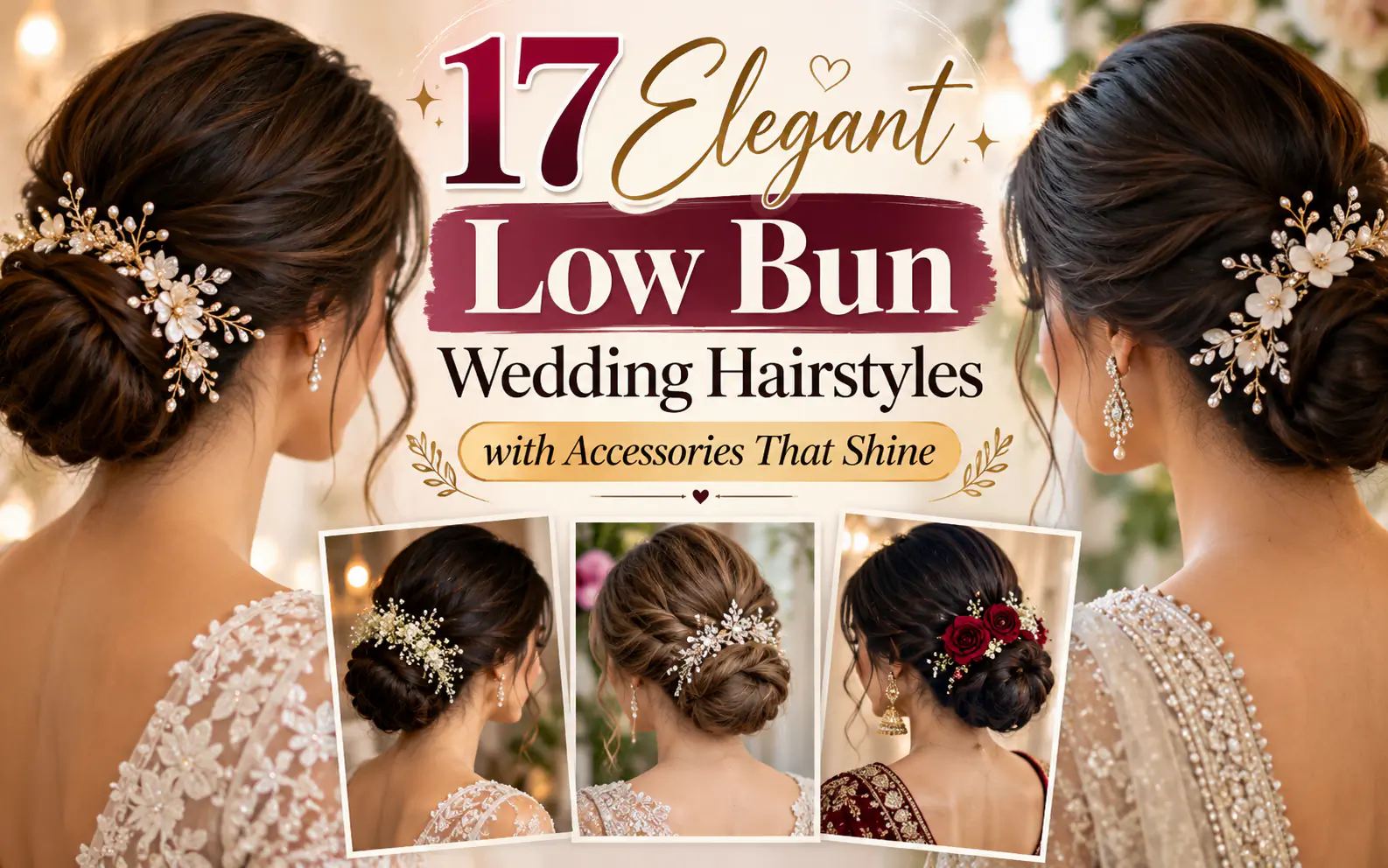
1. Regal Center-Parted Low Bun with Matha Patti

A regal center-parted low bun creates a sleek, symmetrical foundation that lets the matha patti remain the bridal focal point. The low placement keeps the silhouette refined while complementing traditional sarees, lehengas, dupattas, and statement jewelry.
Regal Structure and Visual Balance:
• The center part creates symmetry across the forehead and face.
• A low bun keeps the overall bridal silhouette polished.
• Smooth edges prevent loose strands from competing with jewelry.
• The matha patti becomes the primary statement around your face.
• Slight bun fullness balances elaborate traditional headpieces beautifully.
Styling Technique and Accessory Placement:
• Create a precise center part before smoothing hair backward.
• Gather hair near the nape for comfortable bun placement.
• Secure the bun firmly using discreet pins underneath.
• Position the matha patti centrally across the forehead.
• Anchor side chains securely to prevent shifting during ceremonies.
Bridal Suitability and Long-Wear Practicality:
• This style complements heavily embellished lehengas and traditional sarees.
• Dupattas sit neatly behind the structured center-parted hairstyle.
• Kundan, polki, pearl, and gold matha pattis pair beautifully.
• The controlled shape works especially well for formal portraits.
• Strong flexible hold helps maintain smoothness throughout wedding ceremonies.
2. Sleek High Bridal Bun with Jhoomar
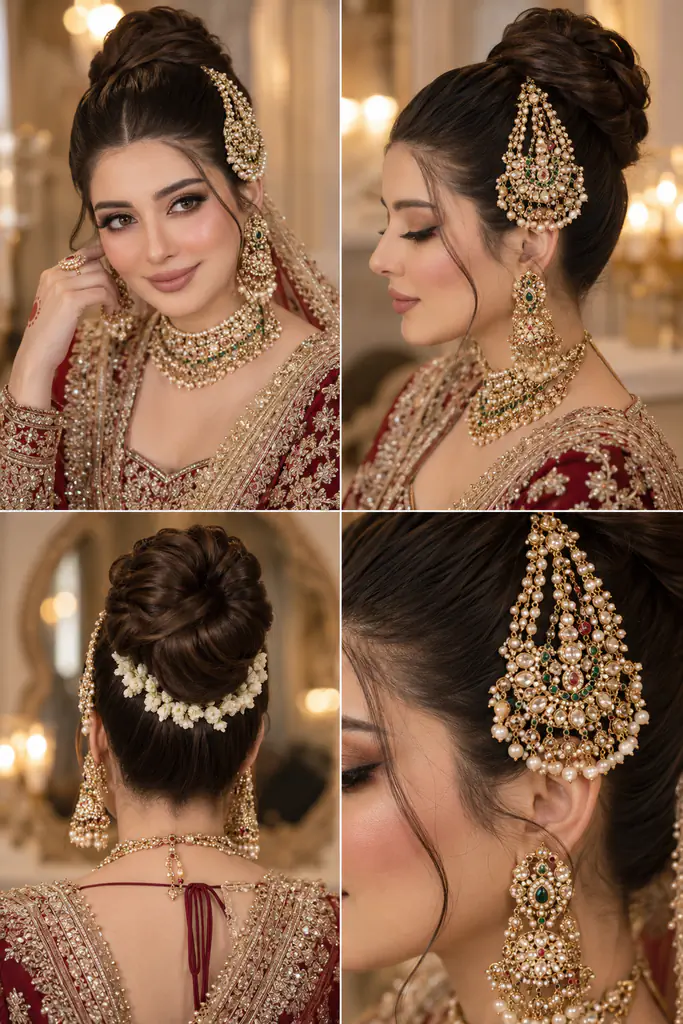
A sleek high bridal bun creates a polished, lifted silhouette that beautifully showcases statement earrings and bridal jewelry. Paired with a side-placed jhoomar, this hairstyle delivers a regal traditional finish while keeping the overall look clean and structured.
Sleek Shape and Regal Impact:
• Smoothly brushed hair creates a refined, sculpted bridal silhouette.
• The elevated bun adds height and elongates facial proportions.
• A side jhoomar introduces asymmetrical sparkle near the temple.
• Clean styling keeps elaborate jewelry from appearing visually overwhelming.
• The polished finish photographs beautifully from multiple viewing angles.
Styling and Jhoomar Placement:
• Begin with a secure high ponytail for stability.
• Use padding when extra bun height or fullness is needed.
• Keep the jhoomar side sleek and free from excess volume.
• Anchor the ornament firmly with discreet, sturdy hairpins.
• Coordinate jhoomar detailing with earrings and other bridal jewelry.
Suitability and Long-Wear Practicality:
• This style suits brides wanting a distinctly regal appearance.
• High buns can complement rounder faces through added vertical height.
• Secure pinning helps maintain structure during lengthy wedding ceremonies.
• A smooth base works especially well with heavier dupattas.
• Test the jhoomar placement before final styling for comfort.
3. Gajra-Wrapped Low Bun with Soft Face-Framing Curls
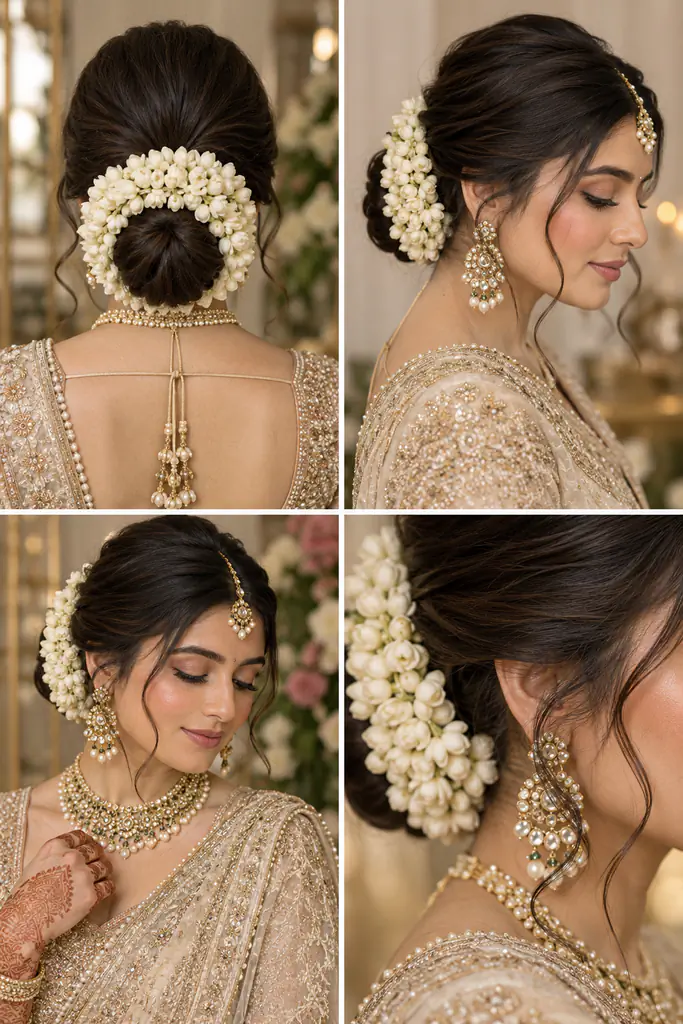
A gajra-wrapped low bun combines traditional floral elegance with soft, romantic face-framing curls. The low placement keeps the hairstyle graceful and practical, while jasmine flowers add fragrance, texture, and a distinctly bridal finish.
Floral Bun Aesthetic:
• Fresh jasmine gajra creates a classic white floral frame.
• The low bun keeps the silhouette graceful and refined.
• Soft curls gently balance the structured floral bun.
• White flowers contrast beautifully against darker bridal hair.
Styling Technique:
• Gather hair smoothly near the nape before securing.
• Shape loose curls around the cheeks for softness.
• Wrap gajra evenly around the bun’s outer edge.
• Secure flowers underneath using discreet U-pins for stability.
Bridal Wear and Longevity:
• This hairstyle complements sarees, lehengas, and traditional jewelry beautifully.
• Fresh jasmine suits traditional ceremonies and festive celebrations.
• The low bun works comfortably beneath dupattas during ceremonies.
• Refresh loose curls carefully without disturbing pinned flowers.
4. Mughal-Inspired Braided Bun with Passa

A Mughal-inspired braided bun combines intricate texture with the regal asymmetry of a traditional passa, creating a refined bridal hairstyle. The structured bun keeps the look secure while giving the side headpiece a clear, elegant focal point.
Regal Shape and Visual Character:
- Braided sections create texture around the polished bridal bun.
- The low bun provides stability for heavier passa jewelry.
- A side part gives the passa enough visible space.
- Intricate braiding adds authentic Mughal-inspired decorative detail.
- Soft volume keeps the overall silhouette elegant and balanced.
Braiding and Passa Placement:
- Begin with smooth sections before creating the structured braid.
- Wrap the braid securely around a firm bun.
- Keep the temple area clean for passa placement.
- Anchor the passa firmly into stable hair near roots.
- Test movement before securing the final bridal accessories.
Bridal Suitability and Styling Balance:
- This hairstyle complements shararas, ghararas, lehengas, and anarkalis.
- Kundan, pearl, or antique-gold passa designs enhance regal styling.
- Keep opposite-side accessories lighter to preserve visual balance.
- Strong pins help maintain the bun throughout long ceremonies.
- A simple maang tikka can complement the asymmetrical passa.
5. Voluminous Crown Bun with Double Dupatta Support

A voluminous crown bun creates a lifted bridal silhouette while providing a stable foundation for layered dupatta styling. Its structured height keeps the head dupatta elevated and complements the added depth of a second drape.
Crown Volume and Overall Shape:
• Crown height creates a regal, elongated bridal profile.
• Full bun proportions balance heavily embellished bridal outfits.
• Soft volume prevents the hairstyle from appearing overly severe.
• The raised placement keeps dupatta layers visually separated.
Construction and Dupatta Support:
• Backcombing creates grip beneath the voluminous crown structure.
• Strong pins anchor both dupattas securely near the crown.
• Lighter head dupattas reduce pressure on the bun.
• Heavier second dupattas work best across shoulders.
• Trial draping helps adjust bun height and placement.
Comfort, Suitability, and Bridal Longevity:
• This style suits formal lehengas and traditional bridal ceremonies.
• Balanced fabric weights improve comfort during extended celebrations.
• Strategic pinning helps prevent slipping during movement.
• Humidity-resistant styling products help preserve crown volume.
• A secure foundation supports long rituals and photography.
6. Polished Low Chignon with Kundan Hair Pins
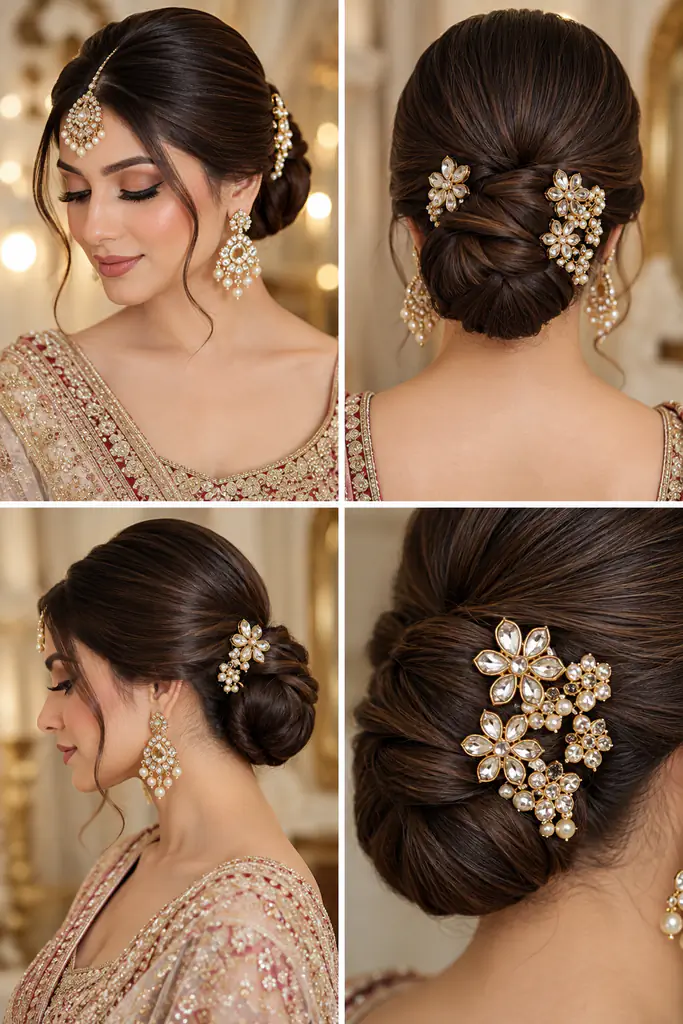
A polished low chignon creates a sleek, refined bridal silhouette while keeping the neckline and jewellery beautifully visible. Kundan hair pins add concentrated sparkle to the neat bun, making this style especially effective for traditional South Asian bridal looks.
Sleek Chignon Structure:
- Smooth the hair closely before gathering it at the nape.
- Keep the chignon compact for a clean polished silhouette.
- Leave minimal flyaways around the bun for refinement.
- A centered placement creates balanced, symmetrical bridal proportions.
- Medium to long hair provides enough length for shaping.
Kundan Pin Placement:
- Arrange Kundan pins along the bun’s outer curve.
- Cluster fewer pins to create focused bridal sparkle.
- Match Kundan tones with coordinating gold bridal jewellery.
- Insert pins into the chignon structure for stronger hold.
- Place heavier accessories securely with discreet supporting bobby pins.
Bridal Wearability and Finish:
- This style complements ornate lehengas and detailed blouses beautifully.
- Keep accessories smaller when wearing a heavy dupatta.
- Apply finishing spray after securing every decorative pin.
- Test the complete hairstyle during your bridal hair trial.
- The low placement stays elegant throughout lengthy wedding celebrations.
7. Rose-Adorned Textured Bun for Baraat Brides
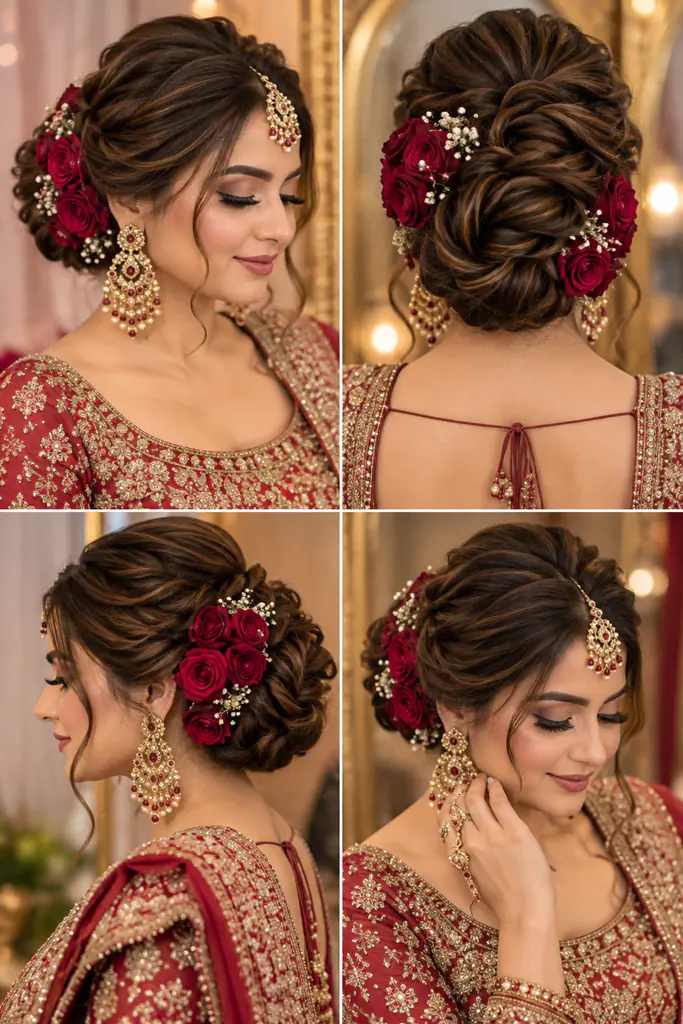
A rose-adorned textured bun brings romantic softness to the traditional grandeur of a baraat bridal look. The dimensional bun creates a fuller silhouette while fresh roses add rich color and a festive floral finish that complements bridal jewelry and dupattas.
Textured Shape and Floral Character:
• Soft texture gives the bun volume without looking overly structured.
• Fresh roses create a rich, romantic focal point.
• Face-framing curls soften the hairstyle around the cheeks.
• Deep red roses complement classic baraat bridal outfits beautifully.
• Smaller blooms keep heavily embellished jewelry visually balanced.
Styling Technique and Secure Structure:
• Build the bun over a firm foundation for stability.
• Teasing adds controlled volume and improves texture throughout.
• Pin roses securely around the bun for dimensional placement.
• Keep the crown slightly lifted beneath the bridal dupatta.
• Flexible hairspray helps preserve texture during extended celebrations.
Bridal Suitability and Baraat Practicality:
• This hairstyle suits lehengas, shararas, sarees, and traditional bridal ensembles.
• Low placement works comfortably beneath heavier dupattas and veils.
• Rose shades can coordinate with outfit embroidery or jewelry.
• Secure foundations help withstand dancing, movement, and lengthy ceremonies.
• Fresh, firm roses generally hold their shape better throughout.
8. Pearl-Woven Low Updo with Center Tikka

A pearl-woven low updo combines a polished chignon with delicate pearl detailing for refined bridal elegance. The centered tikka enhances facial symmetry while keeping the hairstyle traditional, secure, and beautifully balanced.
Pearl-Woven Structure:
• Pearls weave through the updo, creating subtle bridal dimension.
• The low placement keeps the silhouette graceful and balanced.
• Soft texture prevents the chignon from appearing overly rigid.
• Pearl accents complement ivory, pastel, and traditional bridal outfits.
Tikka and Styling Technique:
• Begin with a precise center part for symmetry.
• Smooth the crown before securing the low chignon.
• Weave pearl pins evenly throughout the bun’s textured sections.
• Position the tikka directly along the center parting.
• Hidden pins help secure heavier accessories during ceremonies.
Bridal Wear and Practical Benefits:
• This updo pairs beautifully with lehengas and sarees.
• Low placement leaves room for dupatta draping.
• The open neckline highlights earrings and layered necklaces.
• Medium-to-long hair provides enough length for shaping.
• Flexible hairspray helps preserve smoothness throughout long celebrations.
9. Side-Swept Vintage Bun with Jhoomar

The side-swept vintage bun combines sculpted volume with an elegant, asymmetrical bridal silhouette. A traditional jhoomar adds regal detail near the temple, making this hairstyle especially striking for South Asian wedding celebrations.
Vintage Shape and Visual Appeal:
• Sculpted waves create the hairstyle’s signature vintage-inspired texture.
• Side placement gives the bun an elegant asymmetrical finish.
• Smooth contours keep the overall bridal look polished.
• Subtle crown volume balances the sweeping side direction.
Styling and Jhoomar Placement:
• Begin with curled sections for controlled vintage texture.
• Sweep hair sideways before securing the low bun.
• Pin the jhoomar securely above the opposite temple.
• Use discreet pins to preserve the sculpted shape.
Bridal Wear and Lasting Finish:
• This style complements lehengas, sarees, and traditional bridal outfits.
• Strong-hold spray helps preserve volume throughout wedding celebrations.
• Pearl or crystal jhoomars enhance the hairstyle’s royal character.
• Face-framing waves soften stronger vintage-inspired styling beautifully.
10. Twisted Bridal Updo with Soft Crown Volume
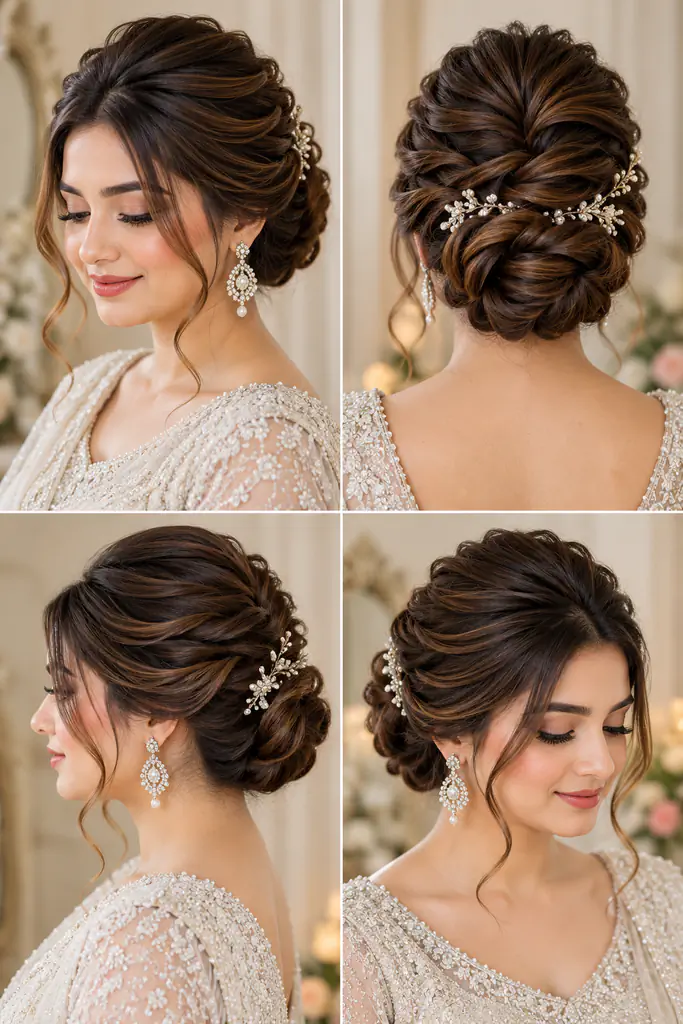
This twisted bridal updo combines elegant structure with gentle crown height for a polished yet romantic wedding look. Layered twists create dimension at the back, while controlled volume helps balance the silhouette and photograph beautifully from every angle.
Crown Volume and Overall Shape:
• Soft crown height creates an elegant, elongated bridal silhouette.
• Smooth surface layers keep the volume looking refined.
• Twisted sections add texture without overwhelming the hairstyle.
• Gentle face-framing pieces soften the structured updo beautifully.
Twisting and Styling Technique:
• Light teasing underneath creates support for crown volume.
• Texturizing spray gives twists better grip and staying power.
• Alternate twisted sections create balanced dimension throughout the back.
• Crossed bobby pins securely anchor each twisted section.
• Loosely opening twists creates softer, fuller bridal texture.
Suitability and Wedding-Day Wear:
• Medium to thick hair naturally supports this structured shape.
• Fine hair benefits from subtle backcombing and added texture.
• The lifted crown works especially well with fuller faces.
• Lightweight veils pair comfortably with the secure twisted base.
• Humidity-resistant spray helps preserve volume during outdoor ceremonies.
11. Traditional Paranda Braid with Floral Details

A traditional paranda braid combines a long, structured plait with colorful silk threads and decorative accents for unmistakable Punjabi-inspired charm. Floral details soften the vibrant accessory, creating a festive hairstyle that works beautifully with traditional outfits and wedding celebrations.
Traditional Braid Structure:
• A long three-strand braid creates the classic foundation.
• Colorful silk paranda threads add length and movement.
• Tight braiding keeps the hairstyle polished throughout celebrations.
• The extended braid creates a graceful, elongated silhouette.
Floral Detailing Choices:
• Fresh flowers bring softness and natural festive contrast.
• Small floral clusters prevent the braid from looking overcrowded.
• White jasmine pairs beautifully with vibrant paranda thread colors.
• Coordinate flower shades with the outfit’s embroidery details.
Styling and Wearability:
• Secure the paranda firmly near the braid’s base.
• Choose lightweight flowers for comfortable, longer-lasting bridal wear.
• This style suits mehndi, haldi, weddings, and festivals.
• Match paranda colors with bangles, dupatta, or jewelry.
12. Voluminous Fishtail Bridal Braid with Pearl Strings
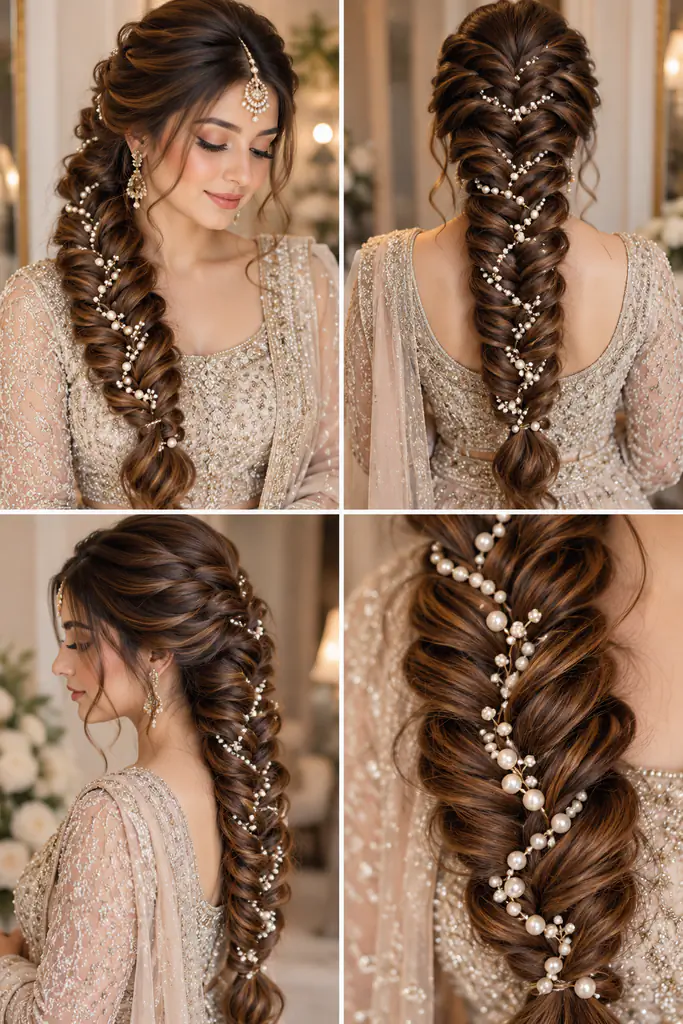
A voluminous fishtail bridal braid combines intricate woven texture with soft, expanded fullness for a romantic statement. Delicate pearl strings woven through the braid add luminous detail while keeping the hairstyle elegant and wedding-ready.
Textural Shape and Visual Appeal:
- Fishtail sections create intricate texture throughout the elongated bridal braid.
- Pulled-out edges add fullness without disrupting the woven pattern.
- Pearl strings introduce delicate shine between layered braid sections.
- Soft volume makes the silhouette appear fuller and more dimensional.
Braiding and Pearl Placement:
- Begin with lightly waved hair for flexible, textured braiding.
- Divide hair evenly before weaving alternating fishtail sections.
- Gently loosen outer loops after securing the braid.
- Thread pearl strings through selected sections for balanced decoration.
- Secure pearl strands discreetly to prevent movement during celebrations.
Wearability and Bridal Longevity:
- Strong styling products help preserve volume throughout long ceremonies.
- Medium to long hair provides enough length for expansion.
- Lightweight pearls prevent excessive tension across the braided sections.
- This style complements veils, earrings, and minimalist bridal accessories.
- Humidity-resistant products help maintain definition during outdoor weddings.
13. Long Bridal Choti with Gota and Hair Jewelry

A long bridal choti creates a regal, traditional silhouette, while gota strings add shimmer and movement through the braid. Decorative hair jewelry brings extra bridal detail, making this style especially effective with richly embroidered sarees and lehengas.
Visual Character and Embellishment:
• Long braids create a regal silhouette for traditional bridal outfits.
• Gota strings add shimmering movement throughout the braid’s length.
• Hair jewelry introduces ornate details without disrupting the braid’s structure.
• Matching gold accents beautifully complement embroidered lehengas and sarees.
• The extended length creates striking detail in back photographs.
Braiding and Accessory Placement:
• Start with smooth, detangled hair for controlled braid formation.
• Extensions can add thickness when natural hair lacks sufficient length.
• Weave gota gently between sections to prevent excessive pulling.
• Secure jewelry at balanced intervals so the braid stays comfortable.
• Choose lightweight ornaments when wearing the style for hours.
Comfort and Bridal Wearability:
• Anchor heavier pieces near stable sections for better weight distribution.
• Refresh flyaways with light styling cream instead of heavy products.
• Use hidden pins to secure loose gota and jewelry ends.
• Schedule a trial to test comfort, balance, and accessory placement.
• This style suits brides wanting traditional detail with dramatic length.
14. Side-Swept Floral Braid with Loose Curls
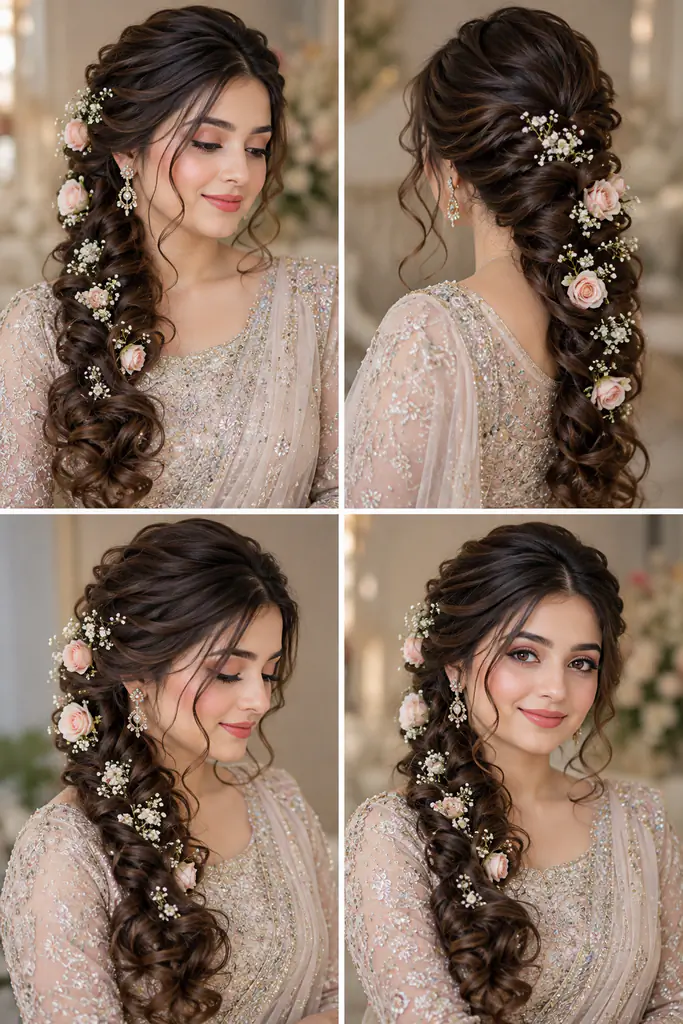
A side-swept floral braid combines romantic texture with cascading curls for an elegant bridal silhouette. The asymmetrical placement keeps the hairstyle soft and dimensional while floral accents add a fresh, feminine finishing touch.
Braided Shape and Texture:
• The side braid creates an elegant, elongated bridal silhouette.
• Loose curls add movement around the shoulders and neckline.
• Gently pulled braid sections create softer visual dimension.
• Face-framing tendrils prevent the style from appearing overly structured.
Floral Placement and Styling:
• Small flowers work beautifully along the braid’s woven sections.
• Fresh blooms should complement the wedding bouquet and overall palette.
• Floral pins can secure accents without weighing down curls.
• Delicate greenery adds texture between larger floral details.
Wearability and Bridal Finish:
• Lightweight styling products help curls maintain movement throughout celebrations.
• This hairstyle suits outdoor weddings and romantic formal ceremonies.
• Longer hair provides enough length for pronounced side-swept texture.
• Humidity-resistant products help preserve curls during warmer celebrations.
15. Half-Up Bridal Waves with Braided Crown

Half-up bridal waves with a braided crown combine flowing movement with a polished, romantic structure. The crown keeps hair away from the face while the loose waves create flattering volume and softness throughout the look.
Romantic Shape and Texture:
- Soft waves create movement without appearing overly structured.
- The braided crown frames the head with delicate texture.
- Loose lengths keep the overall silhouette feminine and airy.
- Gentle volume at the crown adds flattering bridal height.
- Face-framing strands soften the hairstyle around cheekbones.
Braiding and Styling Technique:
- Start with loose waves before creating the crown braid.
- Braid front sections backward, securing them behind the crown.
- Gently loosen braid edges for fuller dimensional texture.
- Hidden pins help stabilize the braided crown throughout.
- Texture spray can improve grip and enhance wave definition.
Bridal Wear and Practical Details:
- This style suits medium and longer hair lengths.
- Half-up placement keeps facial hair controlled during celebrations.
- A veil can anchor naturally around the braided structure.
- Humid venues benefit from flexible, humidity-resistant finishing products.
- Schedule a trial to test waves and accessories.
16. Glossy Hollywood Waves with Center Maang Tikka
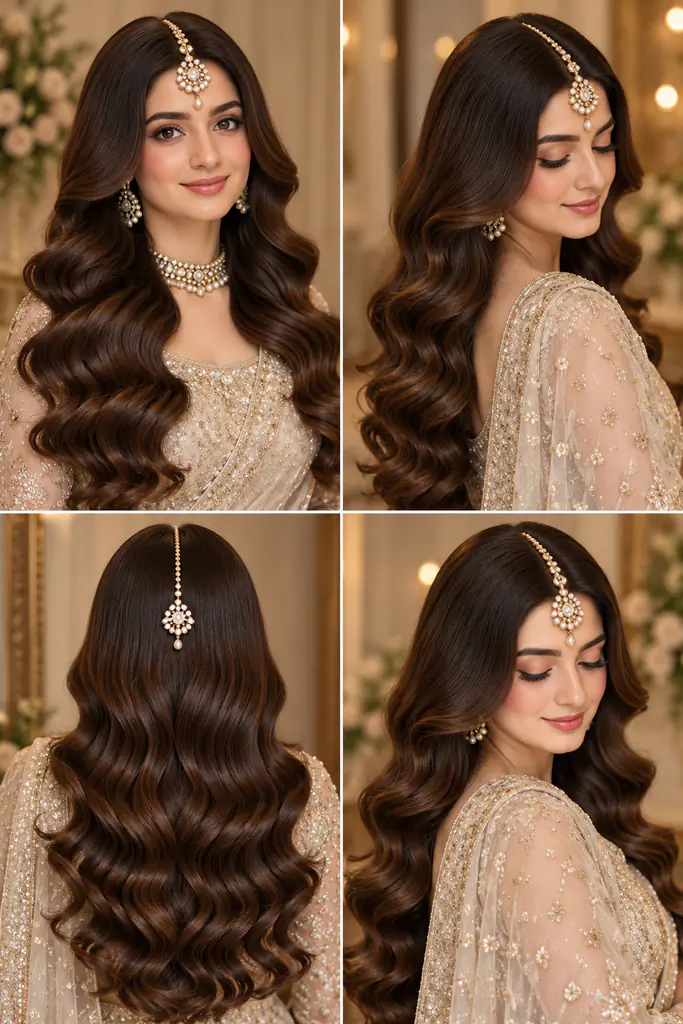
Glossy Hollywood waves create a polished, sculpted silhouette that pairs beautifully with a centered maang tikka. The smooth S-shaped movement keeps the hairstyle glamorous while allowing the traditional jewelry to remain the focal point.
Wave Structure and Finish:
• Deep S-waves create the signature polished Hollywood silhouette.
• Smooth sections enhance shine and keep movement visibly controlled.
• Defined ridges give long hair a luxurious, sculpted appearance.
• Soft volume prevents the waves from looking overly flat.
Maang Tikka Placement and Styling:
• A center part creates balanced placement for the maang tikka.
• Secure jewelry carefully between cleanly separated front sections.
• Choose lightweight tikka designs to preserve the hairstyle’s smooth finish.
• Keep surrounding hair sleek so jewelry remains visually prominent.
Longevity and Bridal Suitability:
• Heat protectant helps maintain shine while reducing styling-related damage.
• Flexible hairspray preserves waves without making movement excessively stiff.
• Humidity-resistant products help protect glossy waves during outdoor ceremonies.
• This style complements lehengas, sarees, and richly detailed bridal outfits.
17. Soft Open Curls with Jhoomar and Crown Lift
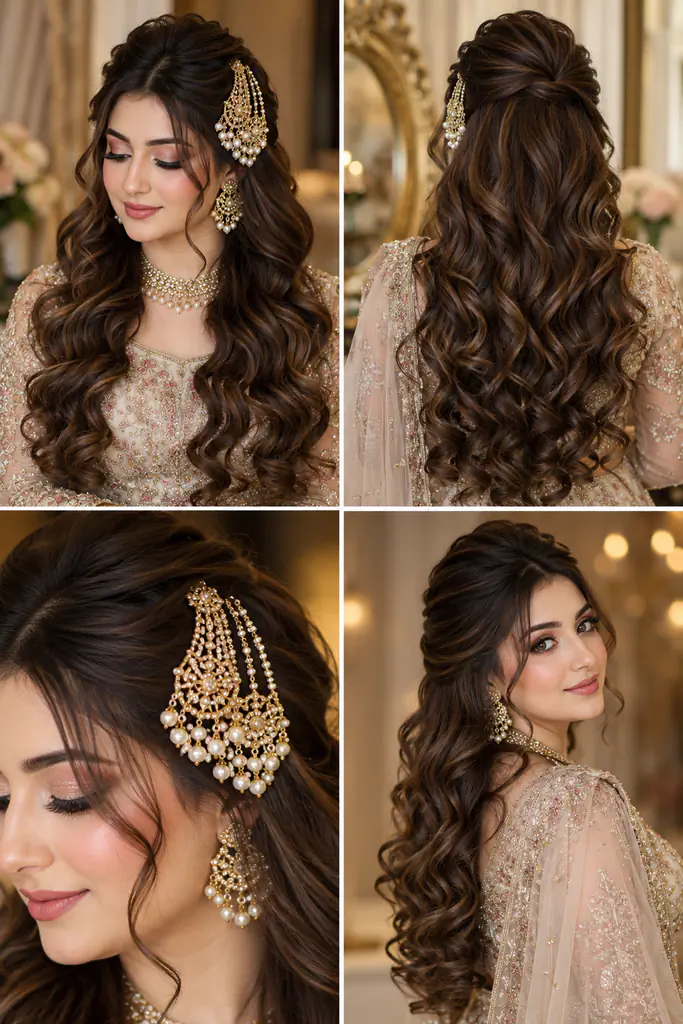
Soft open curls create a graceful bridal silhouette with flowing movement and polished volume. A traditional jhoomar adds elegant side detail, while the crown lift creates height and balances the overall hairstyle beautifully.
Curls and Crown Structure:
• Loose curls create movement without appearing overly structured or formal.
• Gentle crown volume adds height while preserving natural softness.
• Face-framing curls soften the hairstyle and highlight facial features.
• Defined ends keep the open curls looking polished throughout.
Jhoomar and Accessory Placement:
• Position the jhoomar beside the part for traditional balance.
• Secure its chain carefully to prevent shifting during celebrations.
• Choose delicate stones that complement jewelry without overwhelming curls.
• Keep accessory placement slightly elevated to emphasize crown height.
Bridal Wearability and Finish:
• Lightweight styling products help curls remain flexible throughout ceremonies.
• Backcombing beneath the crown provides lasting lift without stiffness.
• Humidity-resistant products help preserve shape during warm wedding events.
• This hairstyle pairs beautifully with lehengas, sarees, and shararas.
18. Voluminous Low Bridal Ponytail with Jeweled Details
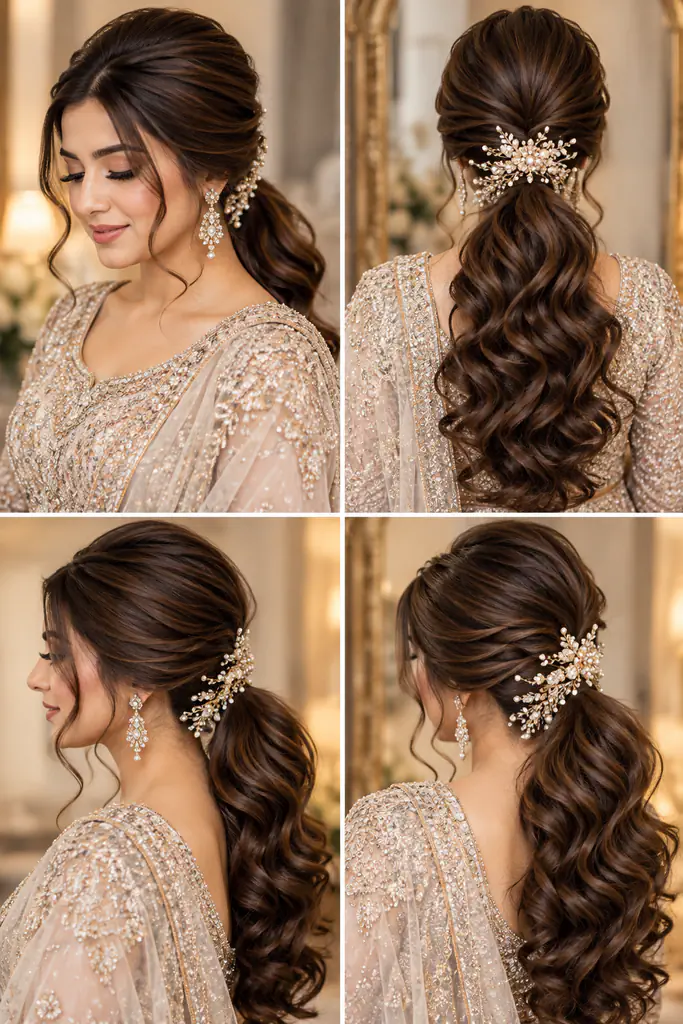
This low bridal ponytail combines a softly lifted crown with abundant, flowing lengths for polished bridal volume. Jeweled details add refined sparkle, while the low placement keeps the silhouette elegant and comfortable throughout ceremonies and receptions.
Silhouette and Visual Balance:
• The low placement creates an elegant silhouette with controlled fullness.
• Soft waves through lengths add movement without losing polished structure.
• Jeweled pins catch light while keeping decoration visually balanced.
• Wrapped bases conceal elastics and create a seamless finish.
Volume and Styling Technique:
• Light teasing at the crown builds height without stiffness.
• Extensions add density when natural hair lacks sufficient fullness.
• Loose curls should be brushed through for airy volume.
• Secure jeweled pieces into stable sections near the anchor.
Bridal Suitability and Longevity:
• This ponytail suits modern gowns, lehengas, and reception looks.
• Fine hair benefits from extensions for fuller photographic dimension.
• Humidity-resistant finishing spray helps preserve shape during celebrations.
• Match jewel tones with earrings for a coordinated bridal finish.
19. Waterfall Braid with Cascading Walima Waves

A waterfall braid creates a delicate woven detail while allowing long Walima waves to flow freely underneath. This combination balances traditional bridal elegance with soft movement, making the hairstyle polished yet naturally romantic.
Braided Structure:
• A waterfall braid creates elegant horizontal detail around the crown.
• Dropped strands blend seamlessly into the cascading waves.
• Gentle pulling keeps the braid soft rather than rigid.
• Secure the braid discreetly behind one ear for balance.
Wave Styling:
• Large-barrel curls create smooth, flowing Walima waves beautifully.
• Brush cooled curls gently for softer continuous movement.
• Root volume prevents cascading waves from appearing flat.
• Face-framing waves add softness around the bridal features.
Bridal Practicality:
• Lightweight hairspray helps preserve movement throughout lengthy celebrations.
• This style suits medium-to-long hair with sufficient density.
• Extensions can enhance length, fullness, and cascading wave definition.
• Freshly washed hair may need texturizing for better hold.
Maintenance Aspect
| Maintenance Aspect | Frequency | Key Products | Purpose |
|---|---|---|---|
| Deep conditioning | 1 time weekly | Hydrating hair mask | Improves softness and shine |
| Scalp cleansing | 2 to 3 times weekly | Gentle shampoo | Keeps roots fresh and manageable |
| Heat protection | Every heat-styling session | Heat protectant spray | Reduces heat damage |
| Frizz control | Styling day | Lightweight serum | Creates a polished finish |
| Volume preparation | Styling day | Mousse or texture spray | Helps buns and braids hold shape |
| Accessory test | During hair trial | Pins, grips, padding | Checks jewelry and dupatta security |
| Final hold | Wedding day | Flexible strong-hold spray | Keeps the style intact |
| Emergency touch-up | As needed | Mini spray, pins, comb | Fixes loose sections quickly |
FAQs
Which wedding hairstyle is best for a Pakistani bride wearing a heavy dupatta?
A structured low, mid, or high bun is usually the most practical starting point because it gives the stylist a stable shape around which the dupatta can be secured. The final placement should be tested with the actual dupatta and jewelry before the wedding day.
Can Pakistani brides wear open hair for their wedding?
Yes. Glossy waves, soft curls, and half-up hairstyles can look beautiful, particularly with lighter dupatta drapes or for nikkah and walima styling. A half-up structure can also keep the front polished while preserving the movement of open hair.
What bridal hairstyle works well with a matha patti or jhoomar?
Center-parted low buns pair naturally with matha pattis, while side-balanced buns and softly lifted crown styles can create space for a jhoomar or passa. The jewelry should be tested during the bridal hair trial so its weight and placement feel comfortable.
How can I make my Pakistani bridal hairstyle last all day?
Begin with properly prepped, completely dry hair. Use heat protectant, styling mousse or texture spray, secure pins, and hairspray in light layers. Avoid applying too much oil or heavy serum before styling because excessive slip can make pins and curls harder to hold.
When should I finalize my bridal hairstyle?
Finalize it after choosing your outfit, dupatta placement, neckline, and main jewelry. Schedule a hair trial before the wedding and test the hairstyle from the front, side, and back while wearing your headpiece whenever possible.
Conclusion
The right bridal hairstyle should make your entire look feel more complete, not more complicated. For Pakistani brides, that often means choosing a shape that works in harmony with the dupatta, jewelry, neckline, embroidery, and the mood of the wedding event. A sleek bun can feel powerfully regal, a gajra-wrapped updo can bring traditional romance, while a decorated braid or glossy wave can create a softer, more modern statement.
Use these 19 wedding hairstyles for Pakistani brides as a starting point rather than a strict rulebook. Save the styles that match your outfit and accessories, then compare them with your hair length, texture, comfort level, and dupatta placement. A bridal hair trial is especially useful for checking how your chosen style looks from the front, side, and back, and how securely it holds your accessories.
Most importantly, choose a hairstyle that still feels like you. Grand bridal hair does not have to mean excessive volume or decoration. The strongest look is one that feels balanced, photographs beautifully, stays comfortable, and gives you confidence from your first portrait to the final celebration.