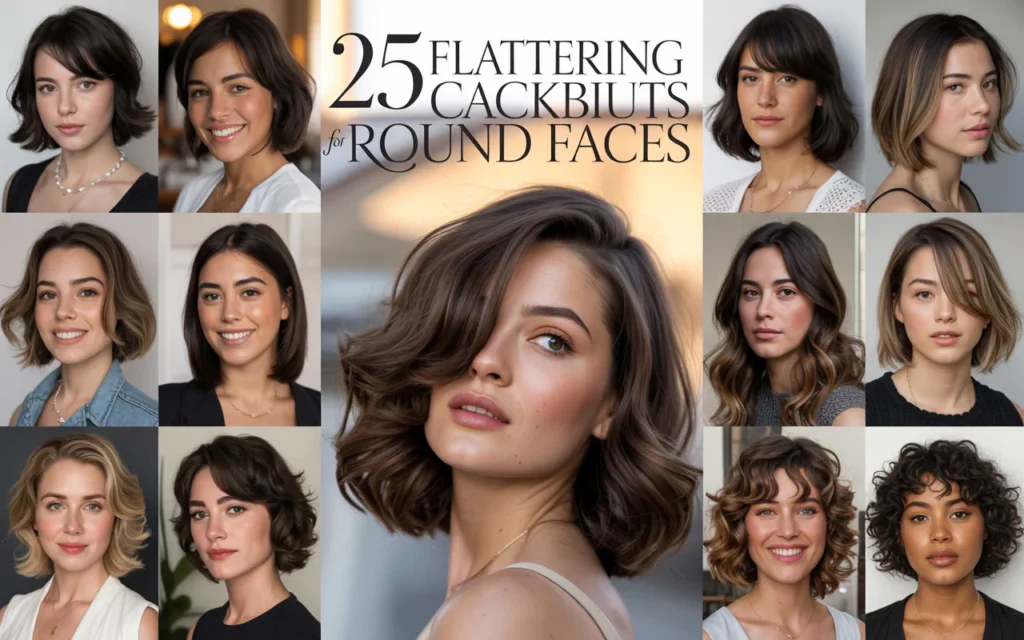
25 flattering haircuts for round faces, from layered lobs to airy pixies, with stylish ideas that add shape, balance, and confidence.
If you have a round face, finding the right haircut can feel frustrating. Some cuts look cute in photos but add width in the wrong places, while others fall flat and hide your best features. The good news is that the most flattering haircuts for round faces are not about hiding your face shape. They are about creating balance, movement, and a more sculpted overall look.
Current beauty and salon coverage keeps pointing toward textured lobs, soft shags, curtain bangs, collarbone cuts, waterfall layers, and even bixie-inspired shapes as strong options because they add length, lift, and face-framing definition instead of blunt width.
In this guide, you will find 25 flattering haircut ideas that perfectly suit round faces, along with practical styling direction, maintenance tips, and shape-enhancing inspiration. Whether you want something short and bold, soft and feminine, or easy to style every day, these round face haircut ideas will help you narrow down what actually works. Think soft layers, strategic volume, flattering bangs, and modern cuts that feel Pinterest-worthy without being hard to wear in real life.
1. Collarbone Lob with Face-Framing Layers
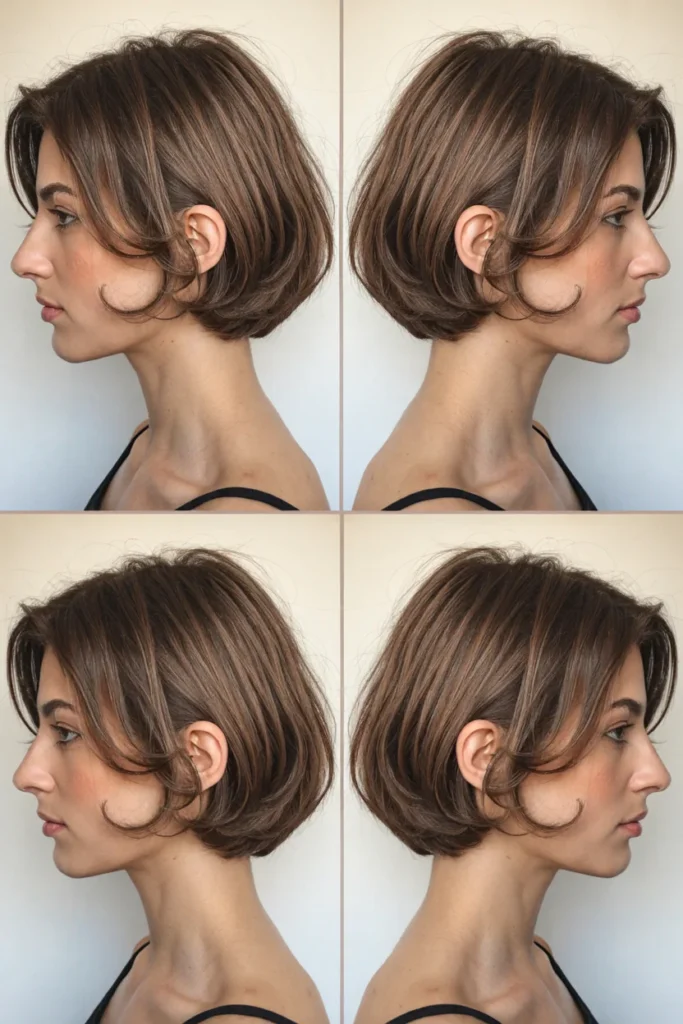
A collarbone lob with face-framing layers hits the ideal middle ground between a classic bob and shoulder-length hair, so it feels polished without looking stiff. The collarbone length adds flexibility, while soft front layers create movement, flatter the features, and give the cut a lighter, more shaped finish.
- This cut works especially well on straight and wavy hair, and it can flatter fine textures because the lob length keeps fullness through the ends.
- On curly or very textured hair, ask for longer face-framing layers and dry-shape placement so the front does not spring up shorter than expected.
- For round faces, the collarbone length helps visually elongate the shape, while curved front layers soften the cheeks without making the cut look heavy.
- Oval and heart-shaped faces usually wear this style beautifully, especially when the shortest face-framing pieces begin near the cheekbones or lips instead of the chin.
- The best version keeps the perimeter grazing the collarbone, then blends longer interior layers into lighter front sections for movement, shape, and a polished grow-out.
- If your hair is thick, these layers remove bulk around the face and stop the lob from feeling boxy, dense, or overly triangular.
- A round brush blowout gives the cut bounce, but a flat iron bend or loose waves also show off the face-framing pieces well.
- It is one of the easier medium cuts to style because it looks polished straight, tucked, waved, or pinned back without losing the shape.
- To keep the outline crisp and the layers intentional, plan trims about every six to eight weeks, especially if you want the collarbone length preserved.
- Soft balayage, money-piece highlights, or slightly brighter front strands can make face-framing layers stand out more clearly and add brightness around the skin.
2. Long Layers with a Center Part
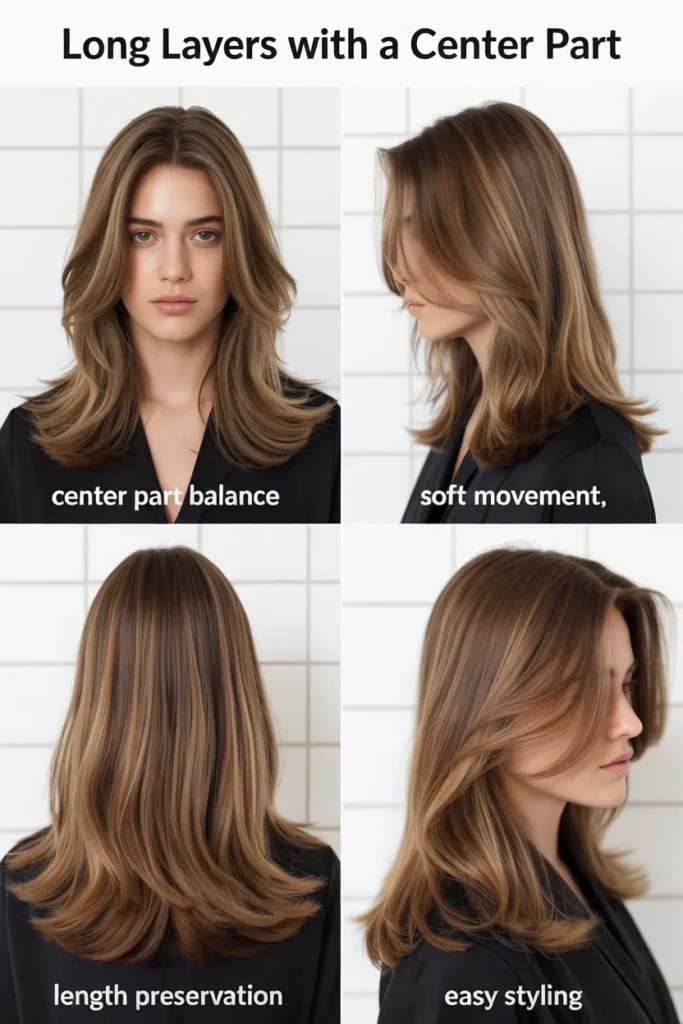
Long Layers with a Center Part keeps your length intact while adding soft shape, movement, and a cleaner overall silhouette. The middle part creates balance through the face, and the long layering helps hair feel lighter, fuller, and easier to style day to day.
- This cut works best on straight and wavy hair, though curly textures can wear it beautifully when layers stay long and controlled.
- A center part flatters oval faces easily and can elongate round faces, while heart or square shapes usually need softer framing around the face.
- Ask for long, blended layers that start below the chin or collarbone so the haircut keeps its length but avoids a heavy, solid finish.
- The overall effect feels softer than blunt lengths, with more flow through the ends and a subtle lift that makes hair appear fuller.
- It is easy to style with a round brush blowout, soft waves, or a sleek finish, and the middle part keeps everything polished.
- To maintain the shape, most long layered cuts need trims about every eight to twelve weeks, though face-framing pieces may need refreshing sooner.
- This hairstyle is versatile enough for ponytails, half-up styles, loose curls, or tucked-back looks because the layers still fall softly.
- For more dimension, pair the cut with face-framing highlights, a money piece, or lowlights, since layered sections catch light beautifully.
3. Textured Lob with Curtain Bangs
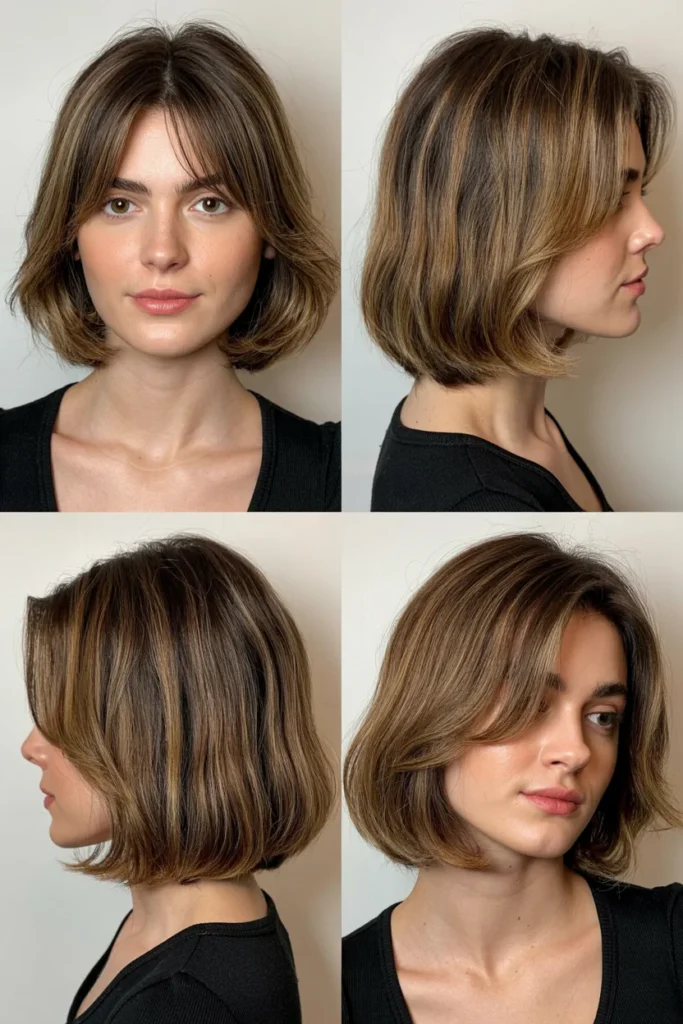
A textured lob with curtain bangs combines a soft, shoulder-skimming long bob with parted fringe that frames the face and builds easy movement. It stays popular because it flatters many face shapes and hair textures, grows out more gently than blunt bangs, and can be styled polished or tousled.
- It works especially well on straight to wavy hair, but thoughtful texturing also helps fine strands lift and thick hair feel lighter.
- Round and square faces benefit from longer curtain bangs near the cheekbones, while oval and heart shapes usually suit softer blended versions beautifully.
- The best shape usually sits around the shoulders, with soft internal layers or weight removal so the lob moves easily instead of looking boxy.
- Piecey ends and cheekbone-grazing bangs add lift and movement, making fine hair appear fuller while keeping thicker hair from looking too solid.
- It can be worn air-dried for an undone finish or styled with loose waves and texture spray for extra separation and volume.
- Expect more frequent bang trims than the rest of the cut because fringe picks up oil faster and loses its shape first.
- This cut is easy to switch up because the fringe can frame the face down, blend into waves, tuck back, or pair with updos.
- Face-framing highlights, soft balayage, and dimensional brunette or blonde tones make the layers stand out more clearly and give the cut depth.
4. Side-Swept Bob for Softer Definition
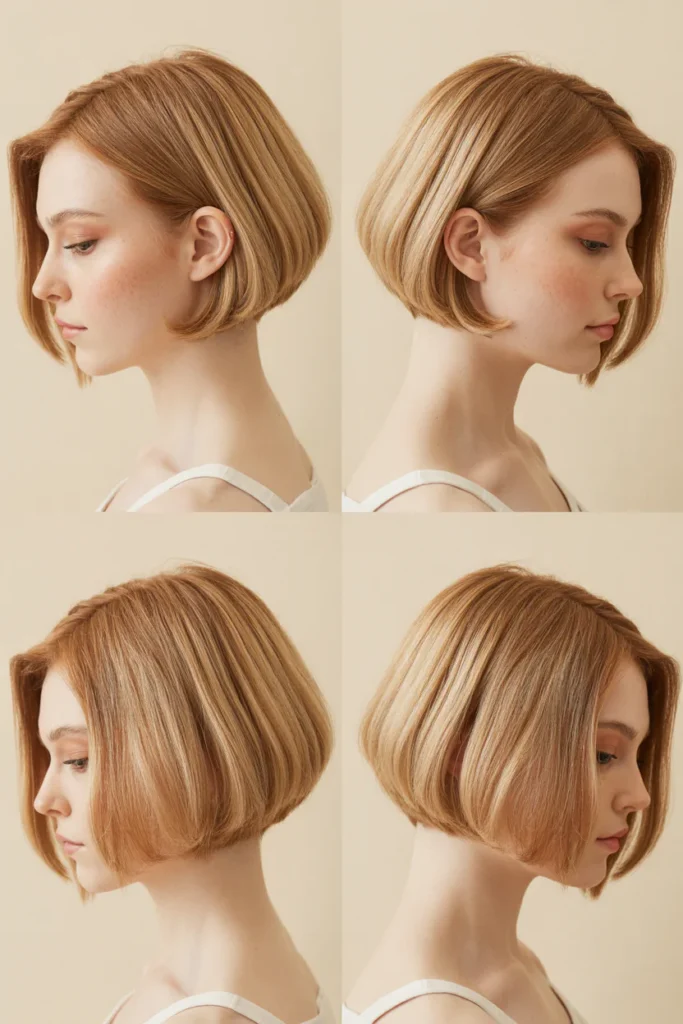
A side-swept bob creates a gentler outline by shifting volume across the face instead of keeping the shape centered and blunt. It feels polished but soft, especially when the front stays slightly longer and the movement is built into the cut.
- This cut suits straight to softly wavy hair best, and fine strands benefit from the side sweep because it creates quick lift and fuller movement.
- A side-swept bob flatters oval, heart, and longer face shapes especially well, while a softly angled front can slim fuller cheeks beautifully.
- Keep the length between chin and collarbone for the softest definition, with longer front pieces and light layers that prevent the shape feeling heavy.
- A deep side part instantly boosts root lift and creates asymmetry, which makes the bob look softer, more dimensional, and less blunt.
- It is easy to style with a round brush, light mousse, or loose waves, and it also looks polished when tucked behind one ear.
- Plan trims every four to eight weeks depending on how sharp you keep the perimeter, since shorter bobs lose shape faster than longer versions.
- You can wear it sleek for a cleaner finish, bend the ends for softness, or add textured waves when you want more body.
- Soft balayage, face-framing highlights, or a glossed brunette tone make the side sweep stand out more and give the cut extra depth.
5. Shoulder-Length Shag with Wispy Fringe
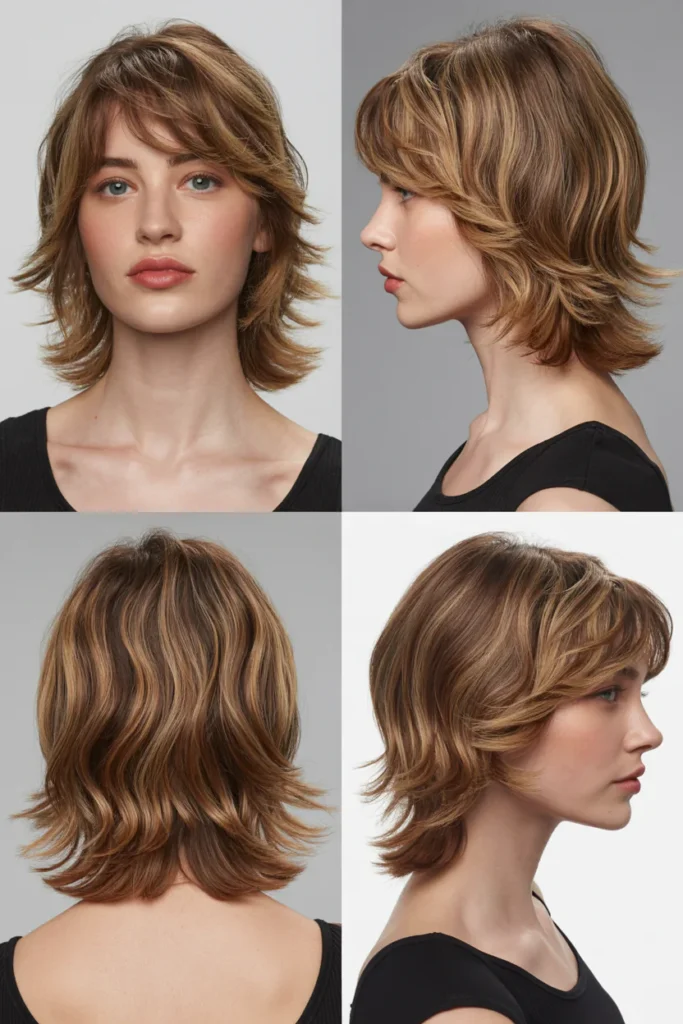
A shoulder-length shag with wispy fringe blends airy layers, soft texture, and face-framing movement into a cut that feels relaxed without looking unkempt. It lightens heavier lengths, adds visible lift and shape, and stays versatile enough for straight, wavy, or softly tousled styling.
- This cut works well on wavy hair and soft natural texture, while straight strands gain movement and thicker hair feels lighter and easier.
- On round, oval, and heart-shaped faces, the wispy fringe softens features beautifully, while longer cheekbone pieces help balance fuller cheeks or broader foreheads.
- The shoulder-length base keeps the cut wearable, and the shag layering removes weight through the mid-lengths so the shape looks airy instead of flat.
- If you want more fullness, ask for shorter crown layers and a feathered fringe, because this combination creates lift and a fuller visual effect.
- Styling is usually simple: rough-dry for natural texture, then use a round brush or light texturizing spray to separate the layers.
- Wispy fringe needs regular shaping to stay soft, so plan trims every four to six weeks, even if the rest grows nicely.
- One reason this haircut stays popular is its flexibility: you can wear it sleek, bend the ends, or enhance waves for a lived-in finish.
- Color looks richer on this shape because highlights, soft balayage, or subtle ribbon pieces catch the layers and make the fringe stand out.
- For the best result, keep the ends lightly textured rather than overly thinned, so the cut stays soft, modern, and easy to grow out.
6. Angled Bob That Elongates the Face
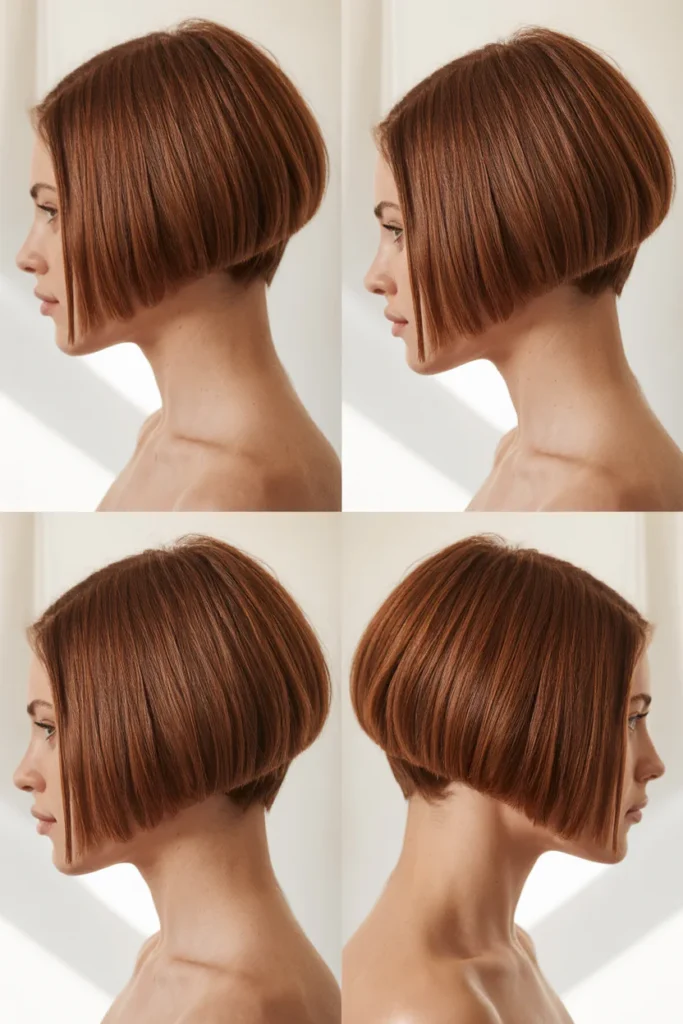
An angled bob that elongates the face uses a shorter back and longer front pieces to create a sharp diagonal line that visually lengthens fuller features. It draws the eye downward, adds polish around the jawline, and gives the haircut a sleek, slimming finish without feeling too severe.
- This cut works best on straight to softly wavy hair because the diagonal line stays clear, but textured versions can also look beautifully sculpted.
- It is especially flattering on round or fuller faces since longer front pieces visually lengthen the shape and shift attention away from width.
- Ask for a bob that sits shorter at the back and longer toward the front, ideally between jawline and collarbone for balance.
- The angled shape can make fine hair look fuller in the back while the front sections create a cleaner, slimmer outline.
- A sleek blowout shows the geometry best, but soft S waves or natural texture give the cut movement without losing its face framing effect.
- Because bob shapes rely on precision, plan trims about every six weeks, or every four to six if your version is shorter.
- You can wear it center parted, tucked behind the ears, softly waved, or extra sleek, which makes it easy for everyday styling.
- For more definition, try face framing highlights or balayage, since lighter pieces around the front can emphasize the angle and brighten features.
- If your hair is thick, ask for soft internal texture so the cut keeps its angular shape without looking bulky or triangular.
7. Soft Butterfly Cut for Round Faces
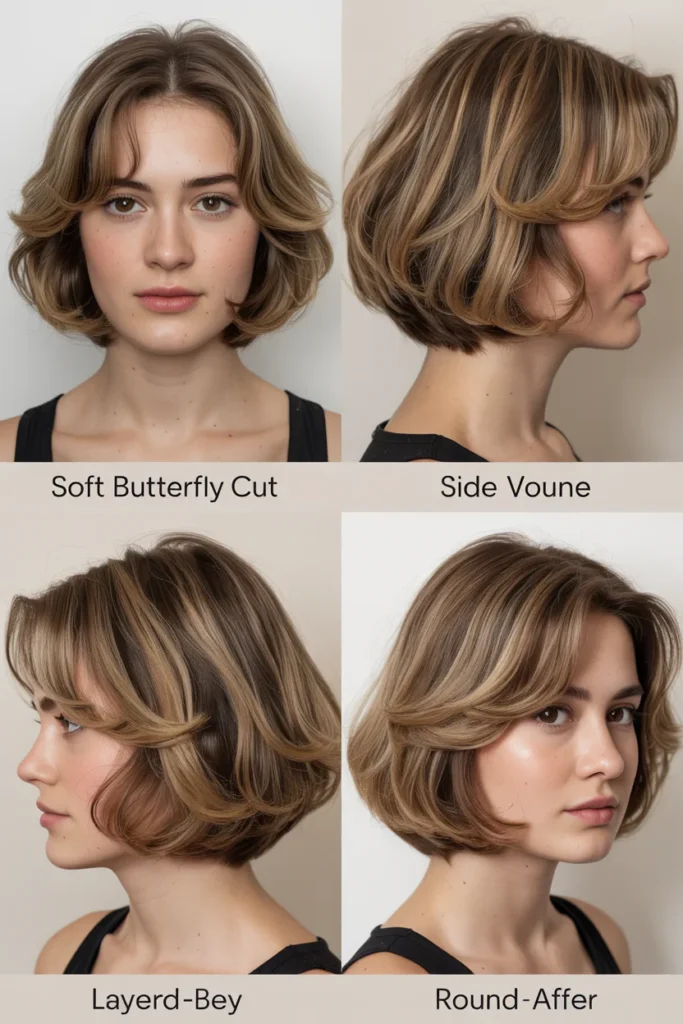
A soft butterfly cut for round faces combines airy face-framing layers with longer lengths, so you get movement, volume, and shape without losing too much overall hair. When the shortest layers start below the chin and the crown stays lightly lifted, this layered haircut helps round features look more balanced and visually elongated.
- This cut works best on medium to long hair and adapts well to straight, wavy, or softly curly textures because the layers need movement.
- For round faces, ask for face-framing pieces that begin just below the chin so the shape looks longer and less wide.
- A soft butterfly cut keeps shorter layers around the front and longer layers through the back, giving that airy two-length effect.
- The lifted crown and feathered ends add bounce and vertical shape, which helps balance fuller cheeks without making the haircut feel heavy.
- A round brush blowout or large-barrel curls styled away from the face brings out the signature butterfly flip and makes daily styling easier.
- On naturally wavy hair, the cut enhances wave pattern and removes bulk, while smoother textures usually need light heat styling for definition.
- Regular trims keep the shortest layers defined and the ends fresh, so the haircut stays bouncy instead of blending into one length.
- It styles beautifully with loose waves, a polished blowout, or pinned-back sections, which makes it versatile for everyday wear and dressier occasions.
- Face-framing highlights, caramel ribbons, or a soft money piece can brighten the front layers and make the feathered shape stand out more.
8. Airy Bixie with Tapered Ends
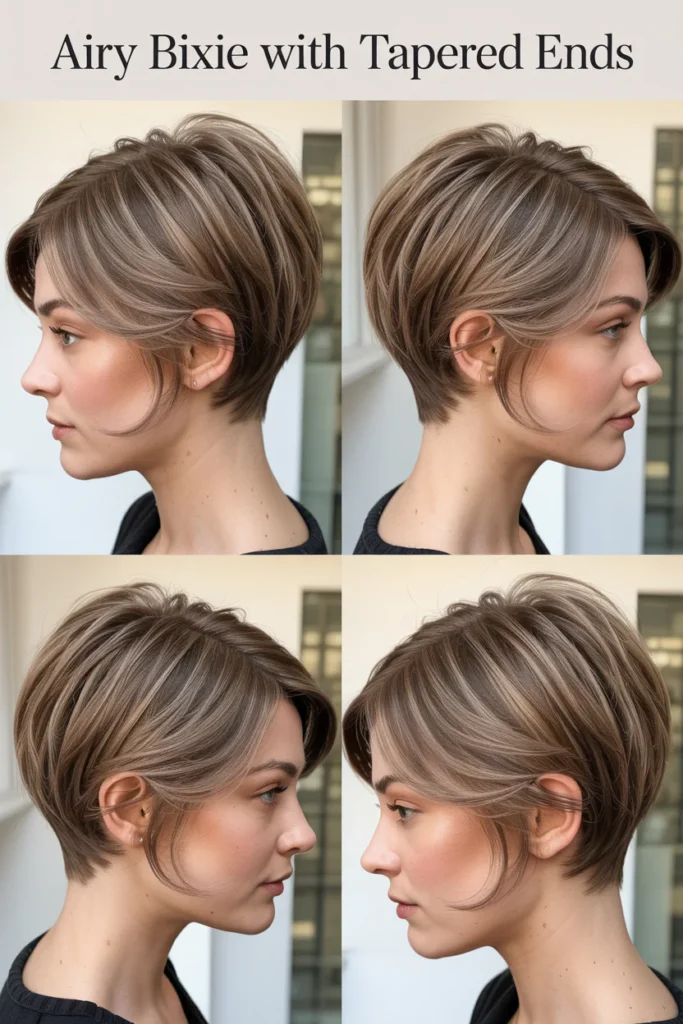
Airy Bixie with Tapered Ends blends the light, cropped feel of a pixie with the softer outline of a bob, creating a shape that looks lifted, textured, and fresh. The tapered ends keep the finish feathered and neat, which makes this short haircut flattering, modern, and easier to style than many blunt cuts.
- This cut works especially well on fine to medium hair because airy layers build movement and visible fullness without making the overall shape feel heavy.
- Naturally wavy hair gives an airy bixie beautiful separation, while straight hair can get the same effect with mousse, dry texture spray, or light styling paste.
- Oval and heart-shaped faces suit this style easily, while round faces benefit from added crown height and slightly longer front pieces.
- The length usually falls between a pixie and a short bob, with a soft taper around the nape, ears, and sideburn area.
- Tapered ends make the silhouette look lighter and more refined, so the haircut feels airy instead of boxy or overly rounded.
- Styling is easy for daily wear: rough-dry for casual texture, then shape the fringe and ends with fingers or a small round brush.
- This style is lower maintenance than a classic short pixie, but trims every five to seven weeks keep the taper clean.
- You can wear it sleek and tucked, softly tousled, or side-swept, which gives the cut enough flexibility for both casual and polished looks.
- Soft balayage, dimensional brunette tones, warm blonde shades, or subtle baby highlights help the tapered layers show more depth and texture.
9. Long Hair with Waterfall Layers
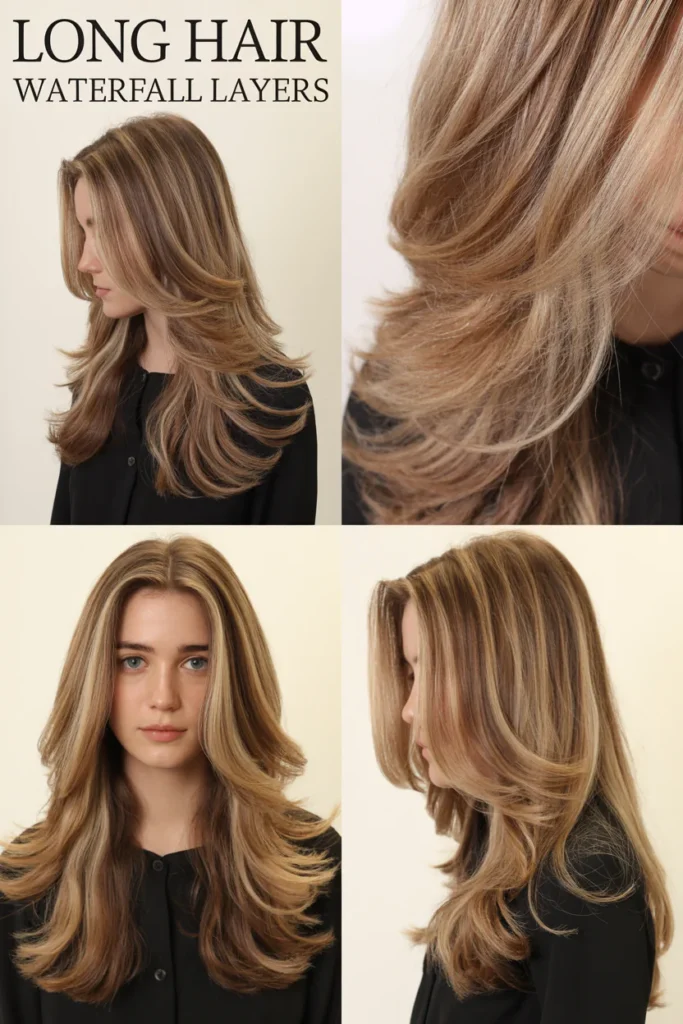
Long Hair with Waterfall Layers creates a soft, cascading shape that keeps your overall length while adding movement through the mid lengths and ends. It is a flattering option for anyone who wants long hair to feel lighter, fuller, and more styled without losing that flowing finish. This cut also works beautifully with both sleek and wavy styling, which makes it practical as well as polished.
- This cut works especially well on medium to thick hair, while fine hair looks fuller when the layers stay long, soft, and lightly blended.
- Waterfall layers flatter oval, heart, and longer face shapes beautifully, and they can also soften round faces when the shortest pieces begin below the chin.
- The shape usually keeps the perimeter long and full, then removes weight through cascading mid lengths and ends to create a flowing, stepped silhouette.
- Because the layers fall gradually instead of looking choppy, this style adds movement, bounce, and airy dimension without sacrificing the overall density of long hair.
- A round brush blowout shows off the cascade best, but loose waves, a smooth straight finish, or a soft curl pattern all suit it.
- Plan trims every eight to twelve weeks to keep the ends polished, prevent thinning at the bottom, and maintain the waterfall effect.
- It is versatile enough for ponytails, half up styles, braids, and heatless waves, since the layering gives shape even when hair is pinned back.
- Balayage, soft highlights, ribbon lighting, or dimensional brunettes make waterfall layers stand out more clearly, because color helps each level catch light.
- For naturally wavy or curly hair, ask for dry or curl aware cutting so the layers spring into place instead of stacking unpredictably.
10. Wavy Lob with Root Lift
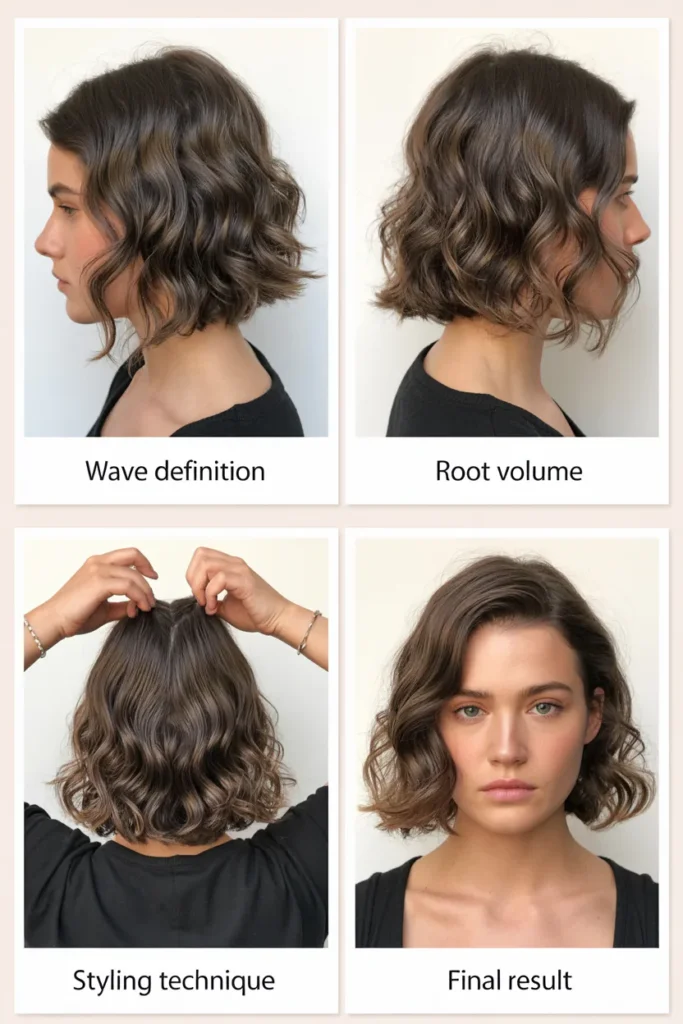
A wavy lob with root lift is a smart choice when you want movement, shape, and fuller-looking hair without going too short. The lob length keeps the style polished, while soft waves and lifted roots create natural body through the crown and mid-lengths. It feels modern, flattering, and easy to style for both casual days and more dressed-up looks.
- A wavy lob with root lift works especially well for fine to medium hair because the shorter length keeps fullness while waves add body.
- This shape flatters round, oval, and heart faces by creating soft vertical movement around the cheeks instead of widening the face.
- Keeping the lob between chin and collarbone usually gives the best balance, while light internal layers prevent the cut from looking heavy.
- Root lift at the crown gives the haircut a fuller silhouette, making flat hair look airier, bouncier, and more intentionally styled.
- A round brush blowout, mousse, or volumizing spray helps build lift at the roots, then loose waves finish the style beautifully.
- It is easier to manage than longer wavy cuts because the length dries faster, holds shape better, and needs less daily styling.
- Trims every six to eight weeks help preserve the clean outline, keep the ends thick, and stop the lob from losing structure.
- You can wear it with a center part, soft side part, tucked behind one ear, or brushed out for a smoother finish.
- Dimensional color like balayage, soft highlights, or a shadow root makes the waves stand out more and enhances the lifted effect.
11. Feathered Mid-Length Cut
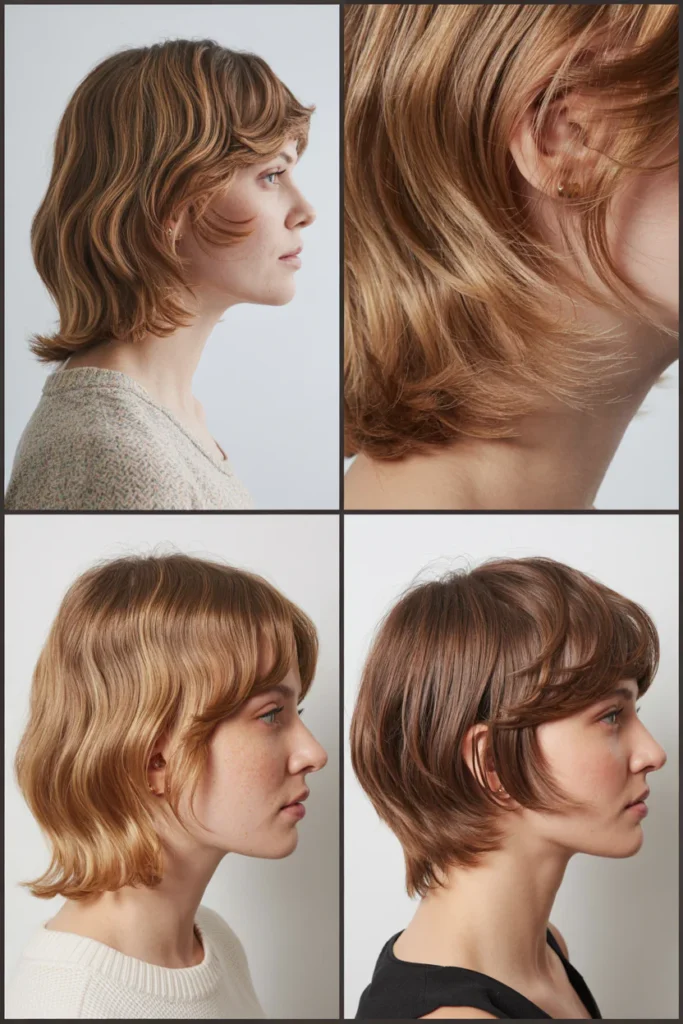
A Feathered Mid-Length Cut uses soft, graduated layers through the mid-lengths and ends to create movement, lighter weight, and an airy shape. It works especially well for adding body to finer hair or removing bulk from denser hair while still keeping enough length for flexible styling.
- This cut suits straight to wavy textures especially well, because feathered layers show clearly, separate easily, and create soft lift without looking bulky.
- For thick hair, feathering removes excess weight through the interior, while fine hair benefits from lighter layering that builds movement and a fuller outline.
- With naturally curly hair, ask for longer, softer layers cut by a curl-aware stylist so shrinkage does not make the shape feel too short.
- Oval, heart, and round faces wear this style beautifully, and rounder faces often look best with cheekbone-skimming pieces or longer fringe.
- The most flattering version usually sits between the collarbone and shoulders, with layers starting around the cheekbone or jaw for balanced face framing.
- Its biggest visual advantage is airy volume, since shorter layered sections create dimension, softness, and bounce instead of one heavy block of hair.
- A round brush blowout enhances the feathered finish, but mousse, texture spray, heatless rollers, or simple air-drying can also keep styling easy.
- If you want extra polish, flip the ends outward slightly, or add loose waves to show the layered pattern without losing softness.
- Maintenance is moderate rather than high, with trims every eight to ten weeks helping the ends stay light, blended, and intentionally shaped.
- Dimensional color like balayage, caramel ribbons, or face-framing highlights makes feathered layers stand out more clearly and gives the cut extra depth.
12. Chin-Skimming Bob with Side Part
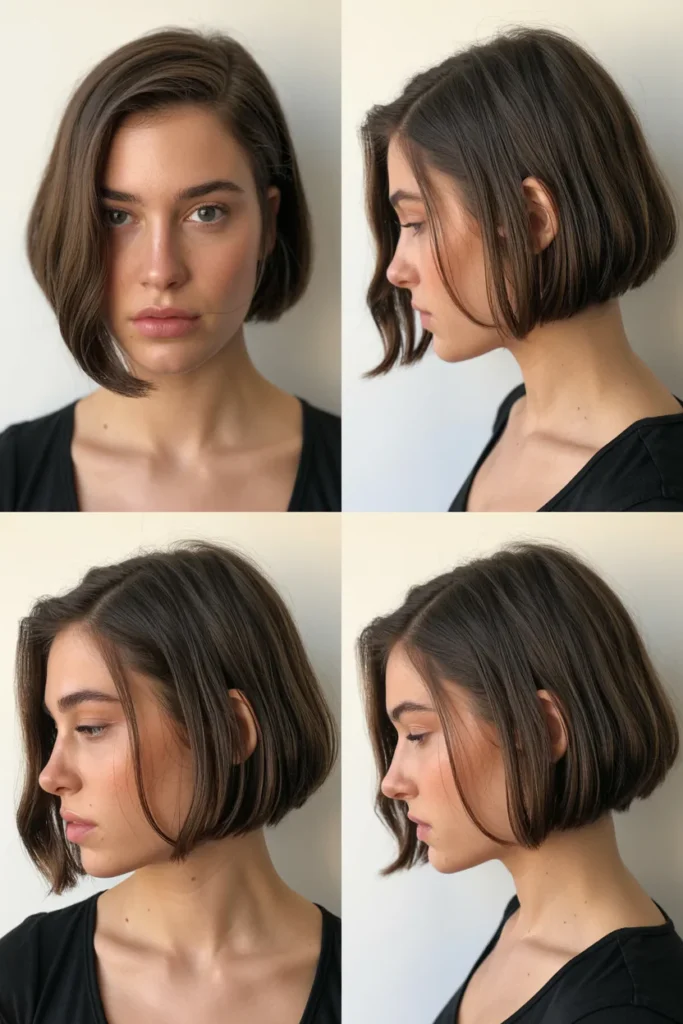
A Chin-Skimming Bob with a Side Part keeps the length neat at the jaw while the off-center part adds movement, softness, and visible lift. It is a polished short haircut that can read sleek, airy, or lightly textured without losing its clean shape.
- This cut works well on straight to slightly wavy hair, while thicker textures benefit from light internal layering to keep the shape from looking bulky.
- Oval and heart-shaped faces wear a chin-skimming side-part bob beautifully, while round faces usually look better with softer ends or slightly longer front pieces.
- Keeping the length right at the chin highlights the jawline, and a side part softens symmetry so the whole cut feels sharper yet gentler.
- For fine hair, the side part builds the illusion of density because more hair falls to one side, creating fuller-looking shape and volume.
- You can wear it sleek with a flat iron, tucked behind one ear, or softly waved for extra body and a relaxed finish.
- Because the perimeter is short and precise, trims every four to eight weeks usually keep the bob crisp and the neckline clean.
- This bob is versatile enough for polished office styling, soft event waves, or quick air-dried texture, depending on your natural pattern.
- Color looks especially rich here, so think honey blonde, chestnut brown, copper, or lived-in brunette highlights to emphasize shape, shine, and dimension.
13. Sleek Long Cut with Subtle Front Layers
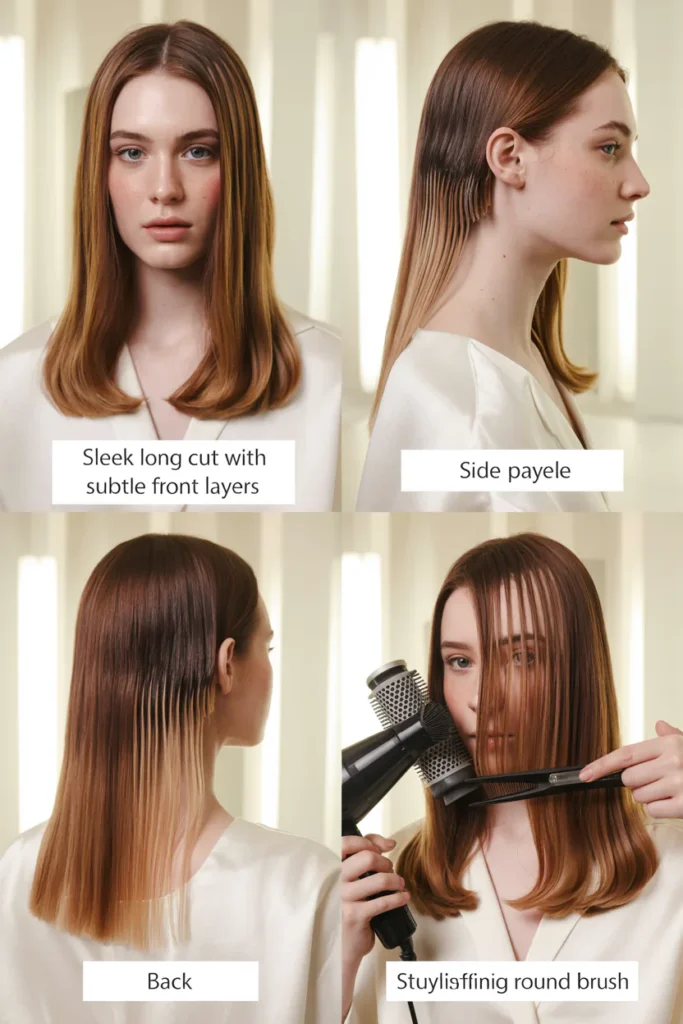
A sleek long cut with subtle front layers keeps the length polished while adding soft shape around the face. The structure feels clean and refined, but the lighter front pieces prevent the style from looking flat or heavy. It is a smart choice for anyone who wants movement, framing, and easier styling without giving up a long, smooth silhouette.
- This cut works especially well on straight to softly wavy hair because the sleek finish highlights the clean length while front layers add controlled movement.
- Round, square, and heart-shaped faces often benefit most, since subtle front pieces can soften edges, frame cheekbones, and create a longer visual line.
- The overall shape keeps the perimeter long and polished, with light front layering beginning around the chin or collarbone for a seamless transition.
- Because the layers stay concentrated near the front, the cut preserves density through the back while making the style look lighter and more refined.
- A center part and smooth blowout show the layering best, but a round brush or flat iron also makes everyday styling quick.
- Regular trims every eight to twelve weeks help the front layers stay crisp, prevent split ends, and keep the sleek finish looking intentional.
- It easily shifts from polished office hair to soft event styling, since the front layers still look elegant in ponytails, waves, or half-ups.
- Subtle balayage, face-framing highlights, or a glossy single-tone brunette can make the front pieces stand out more without disrupting the smooth silhouette.
- For fine hair, this cut adds the appearance of softness and dimension, while thick hair feels less bulky without losing its full length.
14. Curly Layered Cut with Crown Height
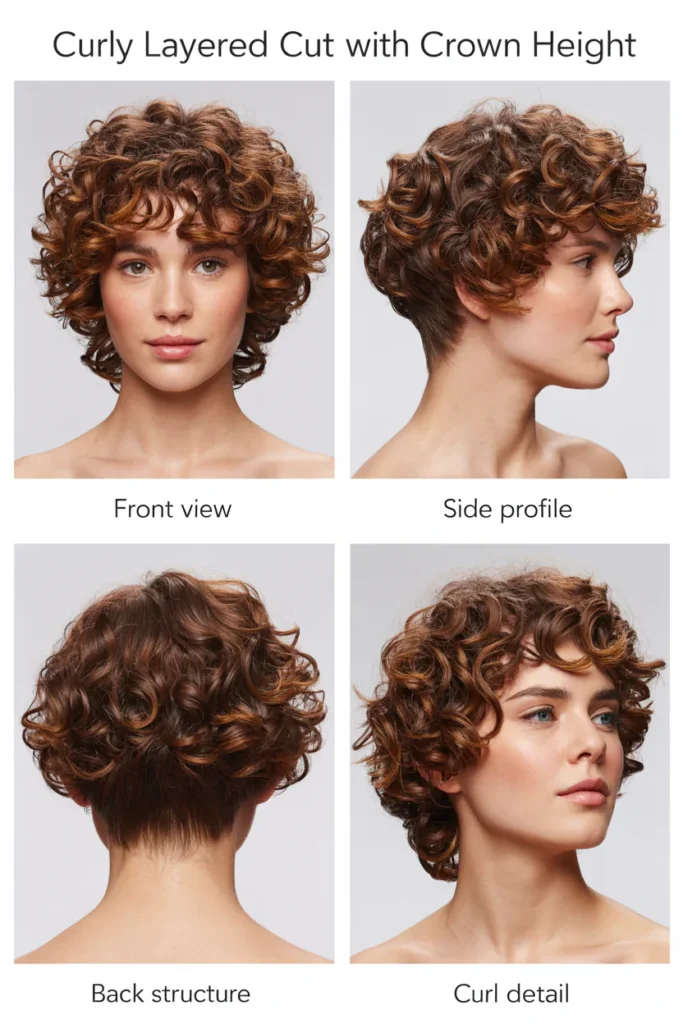
A curly layered cut with crown height builds lift through the top, removes excess weight around the sides, and gives curls a more sculpted shape. It works especially well when you want fuller roots, softer movement, and a cut that feels polished without looking stiff.
- This cut works best on wavy, curly, or coily hair because layered shaping lifts the crown while keeping the silhouette lighter and springier.
- If your face is round or square, extra height at the crown can create a longer effect, while soft layers keep angles from feeling heavy.
- On oval and heart-shaped faces, the cut feels especially balanced because crown lift adds presence without overwhelming the cheekbones or narrowing the chin.
- Medium to long lengths usually show this haircut best, since stacked layers through the top create height and the lower lengths preserve movement.
- The biggest visual payoff is volume in the upper shape, which helps curls avoid a flat root area and reduces that bulky triangle look.
- For styling, a diffuser, lightweight mousse, or curl cream can encourage lift at the crown, while soft scrunching keeps the layers defined.
- Maintenance is fairly manageable, but trims every six to eight weeks help the crown stay airy and stop the layers from collapsing.
- It is versatile enough for wash-and-go days, defined twist-outs, soft updos, or half-up styles because the shorter crown pieces add built-in texture.
- Subtle balayage, caramel ribbons, honey highlights, or a root melt can make the layered crown look fuller by emphasizing curl separation and dimension.
15. Piecey Shag Lob for Easy Texture
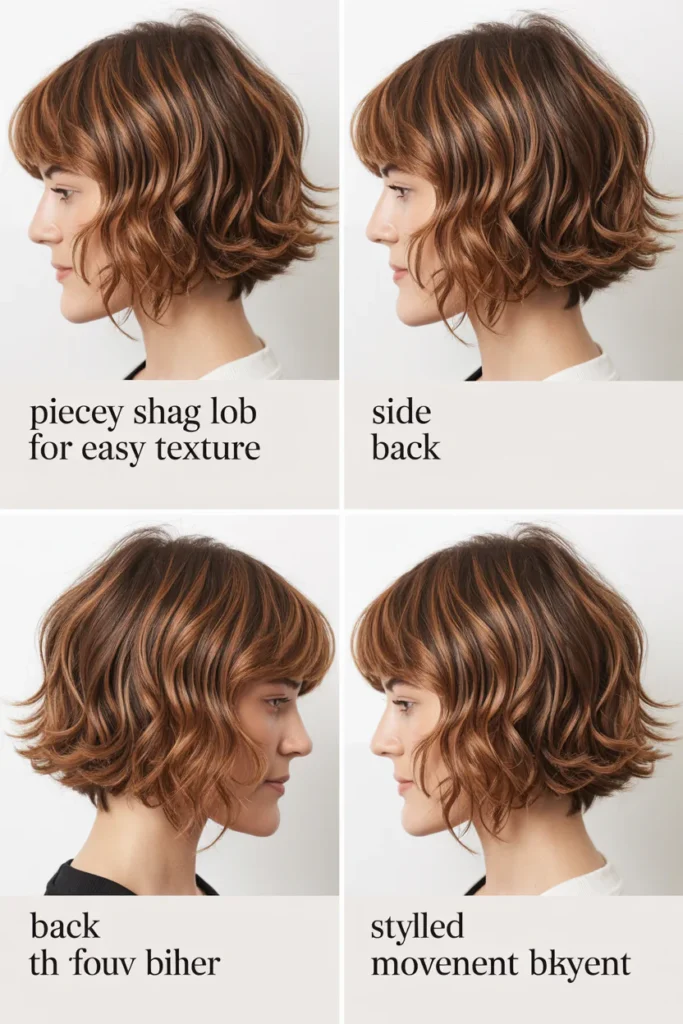
The piecey shag lob combines a collarbone-grazing length with airy layers, broken ends, and soft movement that feels relaxed instead of overstyled. It is a strong choice when you want more texture, shape, and bounce without giving up the ease of a medium-length cut.
- This cut works especially well on wavy, fine-to-medium, and lightly thick hair because the layers build movement without making the overall shape feel heavy.
- It flatters oval, heart, and softly round faces, while cheekbone or jaw-length pieces can be adjusted to slim, soften, or balance features.
- A true shag lob usually sits between the jaw and collarbone, with feathered layers through the crown and textured ends for that piecey finish.
- The broken layering lifts the top and removes bulk through the bottom, so the hair looks fuller, lighter, and more naturally undone.
- For easy texture, scrunch in mousse or texture spray, rough-dry or diffuse, then twist a few sections with an iron.
- Plan trims every six to eight weeks if you want the silhouette crisp, though the shaggy finish still grows out gracefully.
- You can wear it center-parted, side-swept, tucked behind one ear, or loosely waved, which makes it easy for casual and polished days.
- Piecey layers stand out beautifully with balayage, soft highlights, muted copper, or dimensional brunette tones because contrast makes the separated texture more visible.
- Very fine hair needs softer layering to avoid wispy ends, while dense or curly hair benefits from internal shaping instead of too much top volume.
16. Modern Pixie with Longer Top Layers
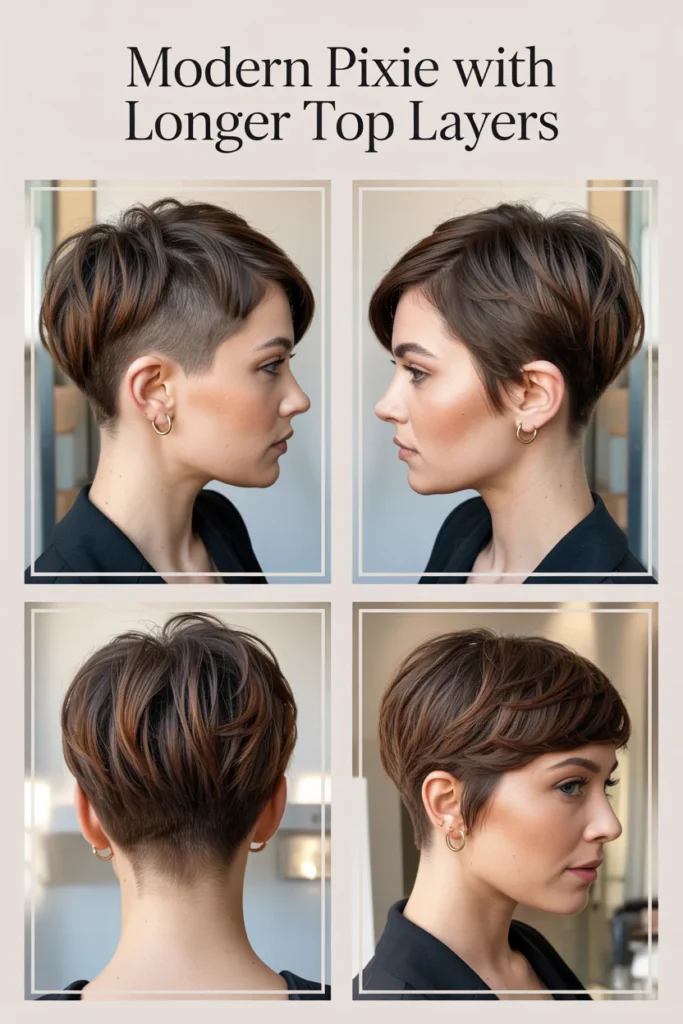
Modern Pixie with Longer Top Layers combines closely cropped sides and back with extra length through the crown, giving the haircut more movement, softness, and styling flexibility. It feels fresher than a classic pixie and lighter than a bob, which makes it a strong choice for anyone who wants definition, volume, and an easy modern shape.
- This cut suits straight, slightly wavy, and fine-to-medium hair especially well because longer top layers build texture, lift, and visible fullness without heavy bulk.
- For thick hair, ask for internal weight removal and piecey layering so the top stays airy instead of swelling outward around the crown.
- Round faces usually benefit from extra height on top and neater sides, while square and heart shapes look softer with wispy front pieces.
- The structure works best when the back and sides stay cropped clean, while the longer crown layers create shape, separation, and a more contemporary silhouette.
- Longer top layers make the pixie look less flat and more dynamic, which helps fine hair appear fuller and gives the profile a lifted effect.
- Styling is usually simple: blow-dry the top forward, upward, or slightly sideways, then finish with texturizing spray or light cream for separation.
- It is easier to switch up than a very short pixie because the extra length lets you create a sleek finish, tousled texture, or soft fringe effect.
- To keep the shape sharp, plan trims about every five to six weeks, especially if you want the sides and neckline looking polished.
- Color looks especially striking on this cut, with blonde highlights, soft balayage, silver tones, or dimensional brunette shades helping the layers stand out more.
17. Soft Wolf Cut with Balanced Volume
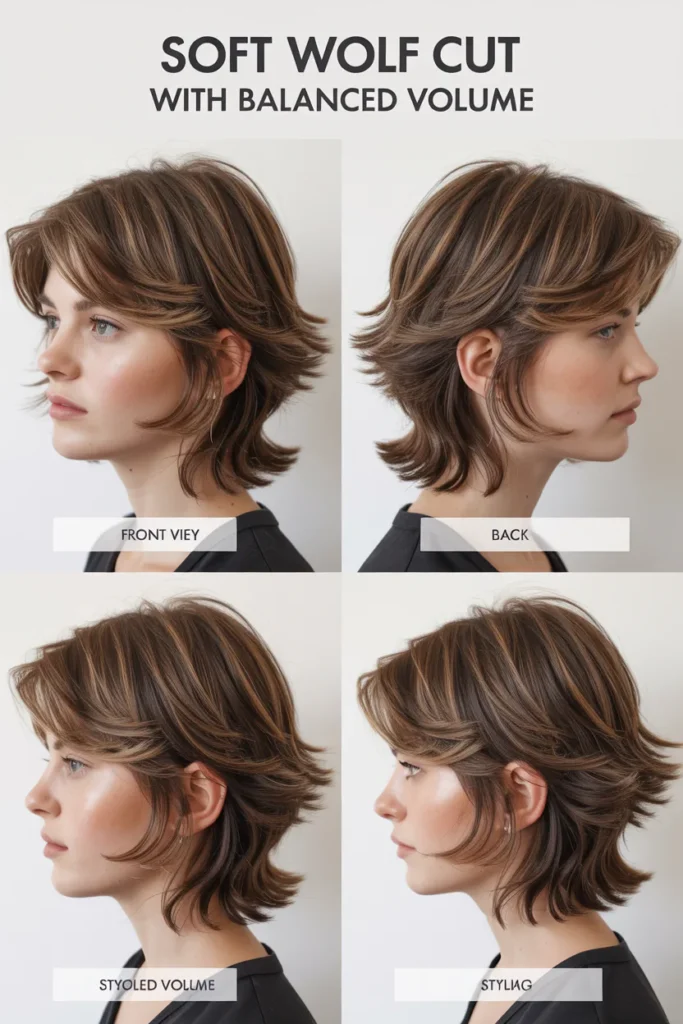
A soft wolf cut with balanced volume keeps the signature layered silhouette, but smooths the contrast between the crown and ends for a more wearable result. You still get lift, texture, and face-framing movement, but the finish feels polished instead of overly shaggy.
- This version works especially well on wavy, medium-density, or thicker hair because the layers add movement while keeping enough fullness through the ends.
- If your hair is fine, ask for soft blended layers and a gentler crown so you get lift without making the lower lengths look sparse.
- Oval, heart, round, and many square face shapes wear it well, especially when the face-framing layers soften angles and open the cheekbones.
- A chin-to-collarbone length is especially wearable for a soft version, because it keeps the layered structure visible without feeling too extreme.
- Balanced volume comes from lift at the crown paired with softer, longer lower layers, which gives the cut shape without a heavy mullet finish.
- A round brush, mousse, and light texturizing spray usually style it best, while natural waves can often dry into shape with minimal effort.
- Plan on trims every six to eight weeks so the layers stay fresh, the fringe sits right, and the silhouette keeps bounce.
- You can wear it natural, softly blown out, loosely waved, or with curtain bangs, which makes it easy to restyle.
- Soft balayage, piece-y highlights, or warm auburn tones help the layers catch light better and make balanced volume look richer.
18. Below-the-Chin Blunt Lob
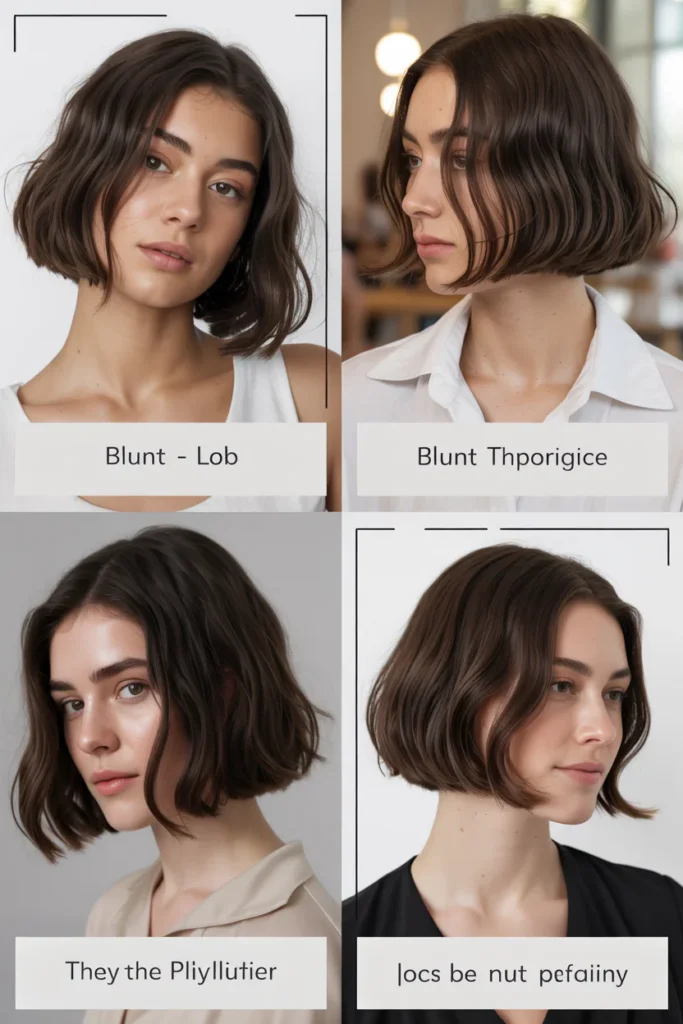
The below-the-chin blunt lob sits just past the jawline, creating a clean, weighty shape that feels polished without looking too severe. Its one-length perimeter helps the hair look fuller, while the added length keeps the cut flexible and flattering across multiple face shapes.
- This cut works especially well on straight to softly wavy hair, because the blunt perimeter stays visible and gives finer strands a thicker, healthier appearance.
- For round faces, keeping the lob below the chin helps elongate the profile, while oval and heart-shaped faces usually carry the crisp line beautifully.
- Ask for a one-length lob that falls just under the chin with minimal internal layering, so the silhouette looks sharp, dense, and intentionally structured.
- Because the ends sit at a strong single line, the style creates instant visual fullness and can make thin or wispy lengths look stronger.
- It is easy to wear sleek with a flat iron, softly bent with a round brush, or lightly textured for movement without losing shape.
- To keep the blunt outline fresh, plan trims every six to eight weeks and use heat protection whenever you blow-dry or smooth.
- The extra length makes this lob more versatile than a shorter bob, so you can tuck it behind the ears or style soft waves.
- A glossy single-process color, rich brunette, or subtle face-framing highlights can amplify the clean edge and make the blunt finish look even shinier.
19. Layered Cut with Fluffy Curtain Fringe
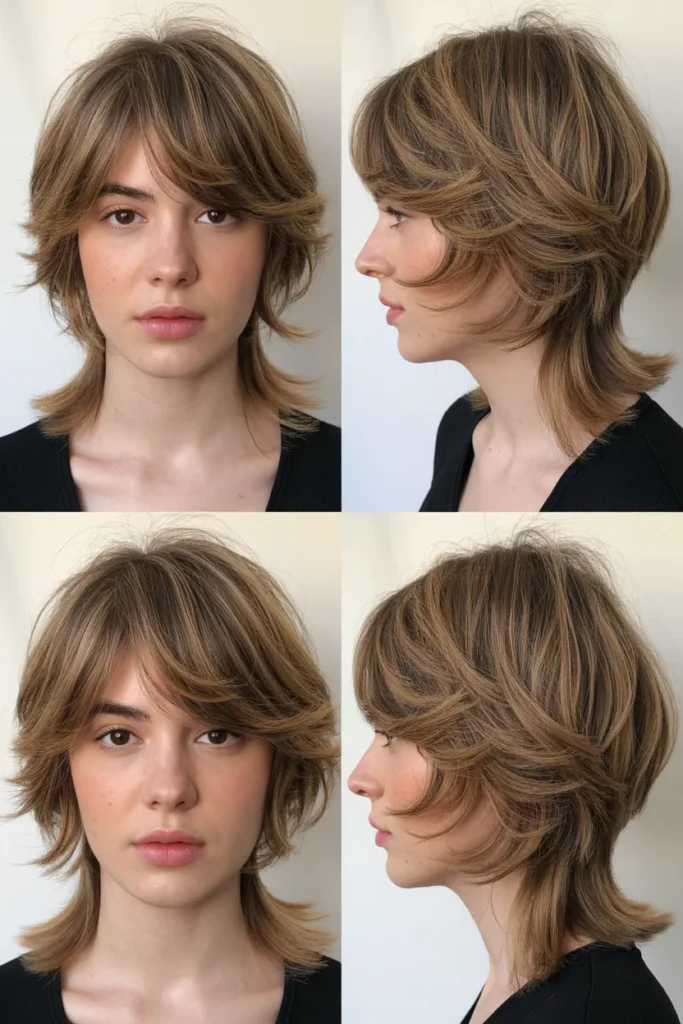
A layered cut with fluffy curtain fringe gives the hair soft lift, airy movement, and a face framing shape that feels polished without looking stiff. The fringe is cut shorter near the center and longer toward the cheekbones, so it opens the face beautifully and blends into the surrounding layers for a light, flattering finish.
- This cut works especially well on medium to thick hair and soft waves, while finer hair usually looks better with lighter, longer layers.
- The fluffy curtain fringe is especially flattering on oval, heart, and softly round faces because it frames the cheekbones and softens the overall outline.
- For the most balanced shape, the fringe should stay shorter in the middle and longer toward the sides, blending smoothly into face framing layers.
- This layered structure removes front heaviness and adds bounce, body, and visible movement, which helps the haircut feel airy instead of dense.
- A round brush blow dry helps the fringe fall open softly, and lightweight styling products help keep the shape smooth, lifted, and defined.
- The fringe needs regular upkeep, because curtain pieces lose their shape faster than the rest of the haircut as they grow longer.
- One of the best things about this look is its flexibility, since it can be worn sleek, tousled, tucked back, or styled with a bouncy blowout.
- Soft babylights or slightly brighter front sections can make the layers and fluffy fringe stand out more by adding dimension near the face.
- If your hair is very fine and straight, avoid too many short or choppy layers, because they can make the ends look thinner.
20. Shoulder-Grazing Cut with Soft Flicked Ends
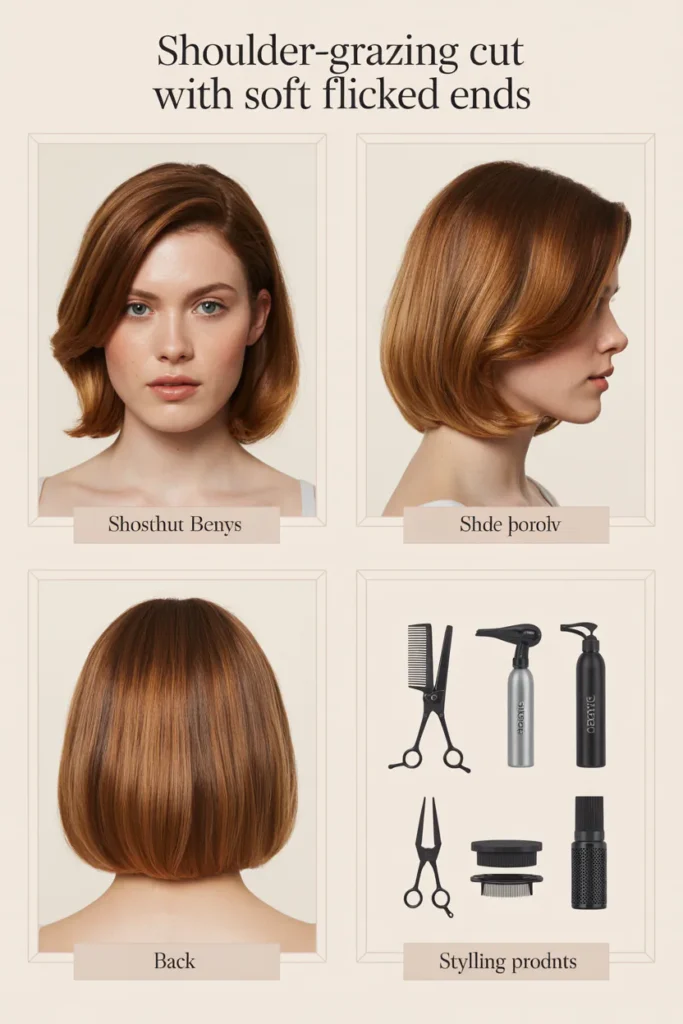
Shoulder-Grazing Cut with Soft Flicked Ends is a polished mid-length style that lands in the sweet spot between a bob and a longer lob. The clean shape keeps it modern, while the softly turned-out ends add lift, movement, and a flattering finish that feels styled without looking stiff.
- This cut works especially well on straight to softly wavy hair, because the flicked ends stay visible and give the shape a clean, airy finish.
- Fine hair benefits from the shoulder-skimming length since it creates width and movement, while thick hair needs light internal texture to avoid heaviness.
- A shoulder-grazing line flatters round and square faces beautifully, while soft front pieces and a side or center part help balance features.
- The cut usually falls between the collarbone and top of the shoulders, giving enough length for flicked ends without losing bob-like structure.
- Softly flipped ends make the hair look lighter and fuller, which is why this shape is especially pretty when you want bounce without layers.
- You can style it quickly with a round brush, blow-dryer, or flat iron, focusing only on the ends for that polished outward flick.
- Trims every six to eight weeks keep the outline sharp, and a heat protectant helps the flicked finish stay smooth instead of dry.
- It is easy to switch from sleek and tucked to textured waves, half-up styles, or a clipped-back front for everyday versatility.
- For extra dimension, pair this cut with face-framing highlights, soft balayage, or a gloss finish, which make the flicked ends stand out more.
21. Asymmetrical Lob for a Sharper Look
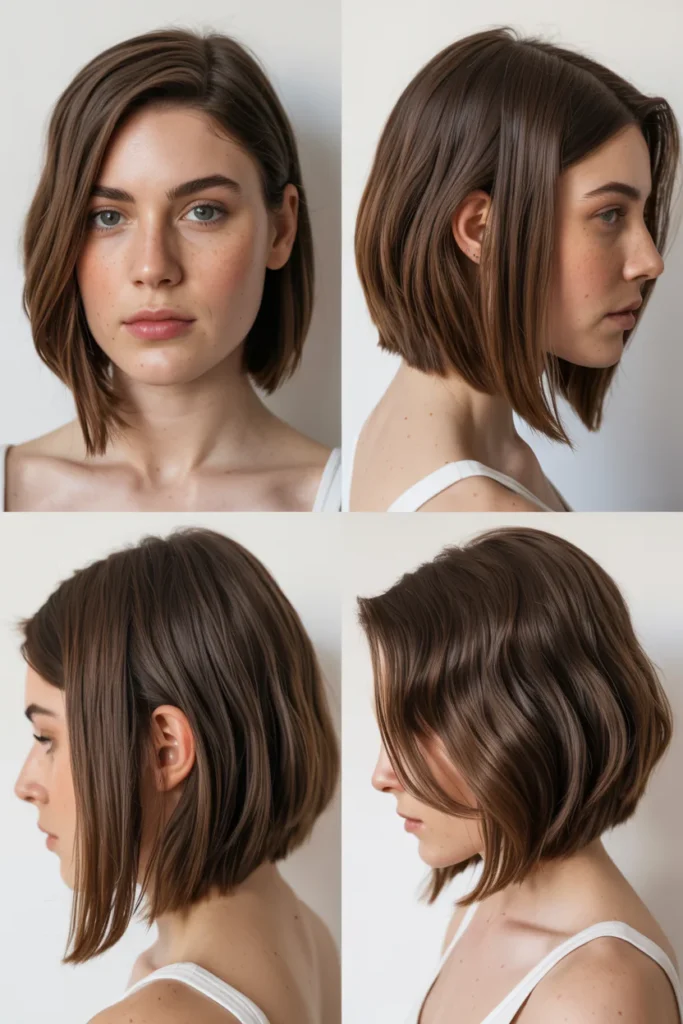
An asymmetrical lob creates a clean long bob shape with one side cut slightly longer, giving the hair a sharper outline without making it feel severe. It frames the face beautifully, looks polished from every angle, and offers the kind of modern structure that still feels easy to wear.
- This cut works especially well on straight to wavy hair, because the uneven perimeter stays visible and gives fine strands a fuller, sharper finish.
- Round and square faces often benefit most, since the diagonal line visually lengthens the face, while softer waves help ease stronger jaw angles.
- The most flattering asymmetrical lob usually sits between the chin and collarbone, with one side subtly longer so the shape feels modern, not extreme.
- A deep side part instantly boosts crown lift and makes the cut look more dramatic, while blunt or lightly textured ends create density.
- You can wear it sleek for a polished finish, bend in loose waves for softness, or tuck one side back when you want extra edge.
- Because it is a precision shape, plan trims about every four to six weeks if you want the asymmetry crisp and the neckline clean.
- It is versatile enough for office days, formal events, and casual styling, and it pairs beautifully with side bangs, soft layers, or tucked ends.
- For color, try face-framing highlights, soft balayage, or a root-shadow melt, since dimension makes the longer side stand out even more.
22. Midi Cut with Invisible Layers
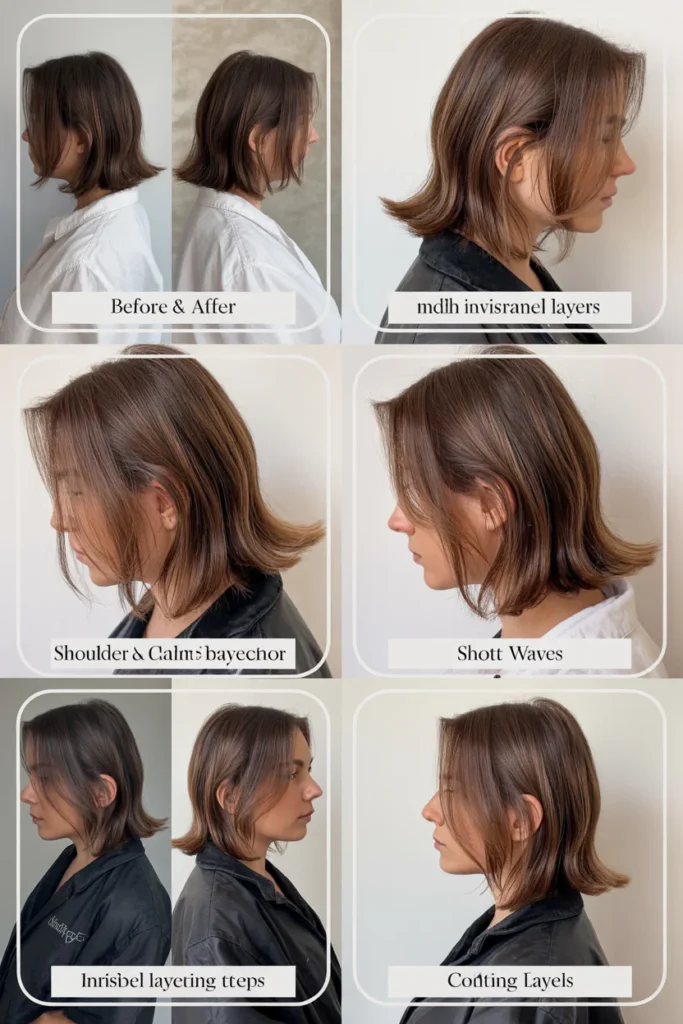
A midi cut with invisible layers keeps the outer shape clean while soft internal layering creates movement, lightness, and a fuller-looking finish. The shoulder to collarbone length feels modern, easy to style, and polished without the obvious step effect of traditional layers.
- This cut works especially well on fine to medium hair because hidden internal layers build lift and movement without making the perimeter look thin.
- On thick or coarse hair, invisible layers remove weight from the inside, so the shape feels lighter, softer, and easier to style daily.
- A midi length usually sits between the shoulders and collarbone, which keeps enough fullness at the ends while letting the layers move naturally.
- Oval faces wear this cut easily, while round faces look best with longer front pieces that start below the chin for subtle lengthening.
- Square and rectangular faces benefit from soft face-framing sections and bent ends, because the blended shape reduces sharpness around the jawline.
- For styling, a round brush blowout adds polished bounce, but this haircut also air-dries beautifully with lightweight cream and a little scrunching.
- Because the layers are subtle, it is easier to switch between sleek straight hair, soft waves, ponytails, and half-up styles.
- This is a smart option if you want a low-maintenance layered look, since the blended interior grows out softer than choppy visible layers.
- To keep the outline clean and the hidden shape working properly, plan trims about every six to eight weeks.
- Soft balayage, babylights, or slightly brighter face-framing pieces can make invisible layers show more dimension without ruining the smooth overall finish.
23. Face-Framing Cut with Deep Side Part
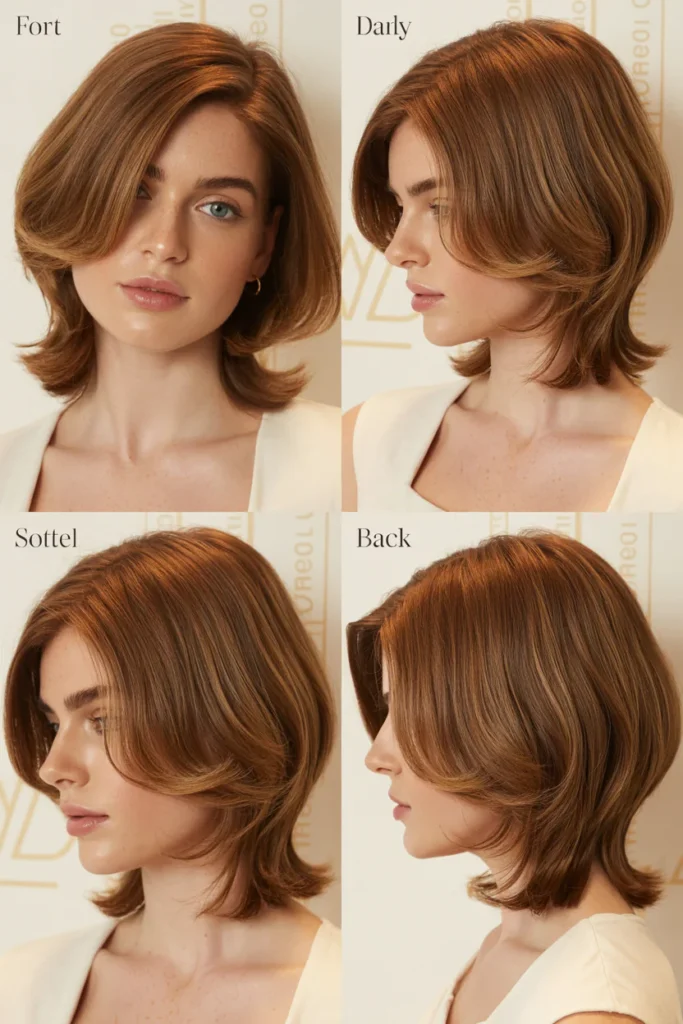
A face-framing cut with a deep side part creates soft movement around the cheeks and jaw while shifting visual weight to one side for instant lift. The shorter front pieces highlight the eyes and cheekbones, and the off-center part makes the whole shape look fuller, softer, and more polished.
- This cut works especially well on straight, wavy, and softly curly hair because the front layers stay visible and the part holds beautifully.
- Round and square faces usually benefit most, since angled face-framing pieces and a deep side part create length and soften stronger cheek or jaw lines.
- On oval faces, keep the framing balanced near the cheekbones or lips so the style enhances natural symmetry without making the front look heavy.
- Medium to long lengths show this haircut best, with the shortest pieces starting between the cheekbone and chin for a softer, blended finish.
- The deep side part builds instant root lift and asymmetry, which makes finer hair appear fuller and gives dense hair a more polished shape.
- A round brush blowout, velcro rollers, or loose waves all flatter this look, and the front pieces can also be tucked cleanly behind one ear.
- Plan trims about every six to eight weeks if you want the framing crisp, though longer blended layers can often stretch slightly longer.
- It is easy to restyle into ponytails, soft updos, half-up looks, or sleek blowouts, since the parting alone changes the overall mood.
- For extra dimension, ask for money-piece highlights, beige balayage, or glossed brunette ribbons around the face so the cut catches light.
24. Rounded-Length Cut with Tapered Ends
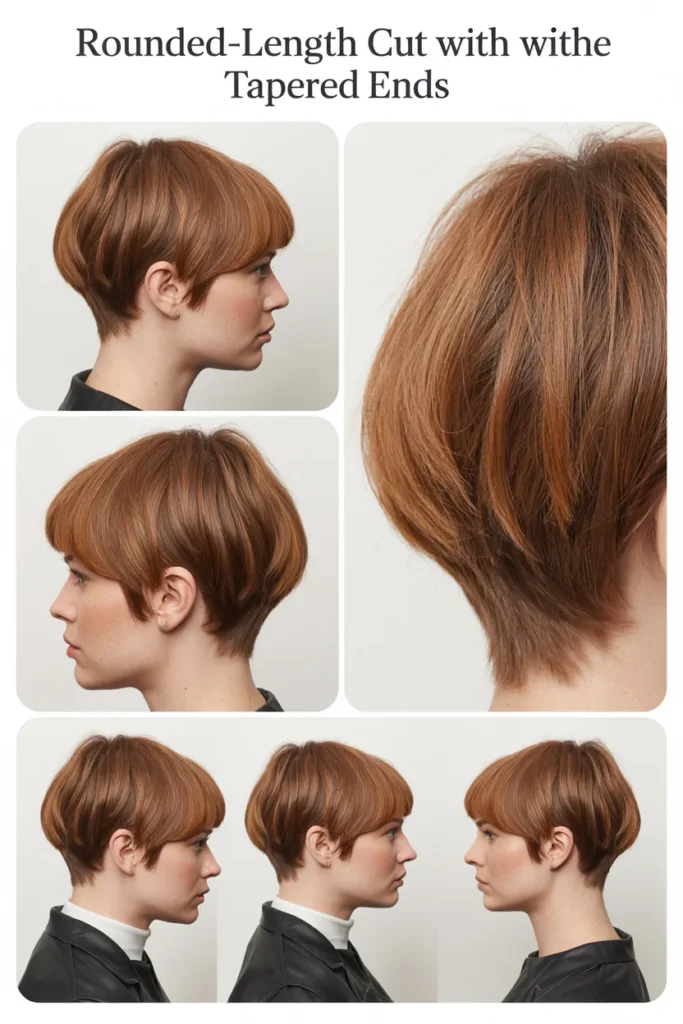
A Rounded-Length Cut with Tapered Ends keeps the silhouette softly curved instead of heavy or boxy, which makes the hair fall in a smoother, more flattering shape. The tapered finish removes weight at the ends to create softness, movement, and a lighter feel without sacrificing the overall structure of the cut.
- This cut works best on straight to softly wavy hair with medium density, because the rounded outline stays visible while tapered ends keep movement natural.
- Fine hair can wear it too, but tapering should stay subtle so the perimeter still looks full and polished rather than wispy.
- For thick hair, tapered ends remove excess weight in the right places, giving the cut more swing, softness, and shape without losing length.
- Round faces usually look best when the length falls below the chin, while oval faces can handle shorter rounded versions with ease.
- Square and heart-shaped faces benefit from the curved outline and softened tips, especially with front pieces that skim the cheekbones or jaw.
- Ask your stylist to keep fullness through the middle, then lightly taper the ends, so the shape feels rounded, airy, and never blocky.
- A round brush blowout, soft bend from a flat iron, or loose waves all suit this cut because the tapered ends move easily.
- Maintenance is simple, but trims every six to eight weeks matter because soft ends lose their shape faster once dryness or splitting starts.
- For color, balayage, soft highlights, or a root shadow can make the tapered ends look more dimensional and help the rounded shape pop.
- You can wear it sleek for a cleaner finish, tuck one side back, or pin it half-up without losing the cut’s balanced outline.
25. Voluminous Long Cut with Soft Waves
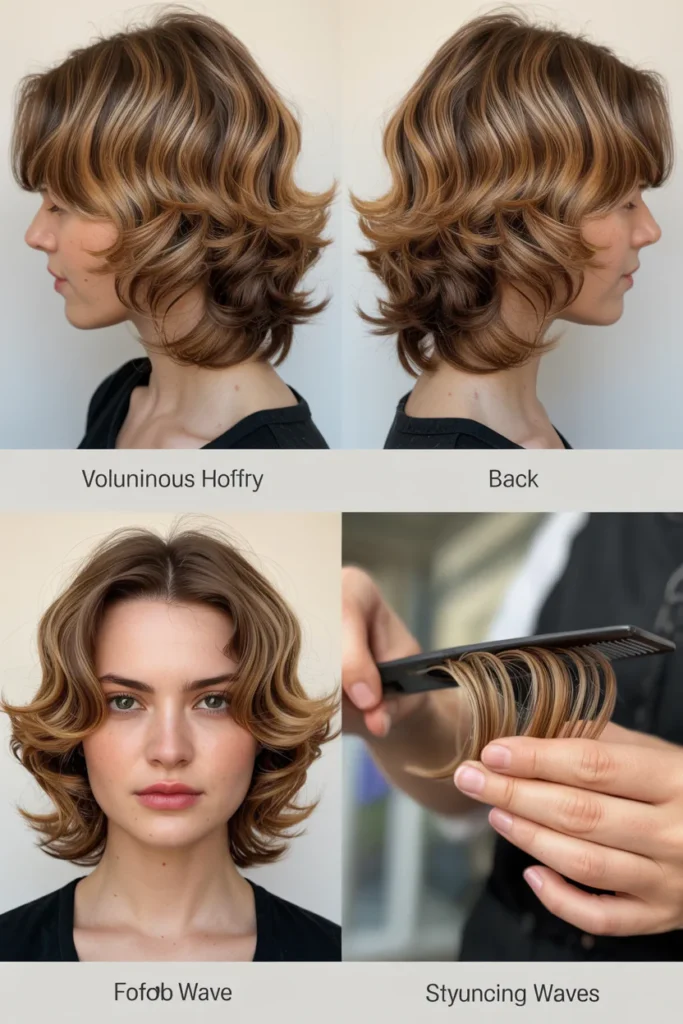
A voluminous long cut with soft waves keeps the length intact while adding movement, shape, and a fuller visual finish. The layered structure helps the hair feel lighter, style more easily, and look naturally polished without losing its soft, flowing effect.
- This cut works especially well on medium to thick hair because long layers remove weight while soft waves keep the length airy and fluid.
- Fine hair can wear it too, but the ends look fuller when the layers stay subtle and the waves start below the cheekbones.
- Round and square faces usually benefit from this shape because the long silhouette elongates the face and the waves soften sharper lines.
- The best version keeps the perimeter long with blended internal layers, creating movement through the mid lengths without making the bottom look thin.
- Soft waves give this long cut a fuller, lifted finish, so the hair appears denser, bouncier, and more polished from every angle.
- Round brush blowouts, loose flat iron bends, or scrunching your natural texture all suit this shape and keep the waves soft.
- Regular trims keep the outline clean, prevent split ends from climbing, and stop the lower half from turning heavy or stringy.
- This hairstyle shifts easily from casual to polished, since the layers can be worn smooth, loosely waved, clipped up, or half tied.
- Dimensional balayage, honey ribbons, or subtle face framing highlights bring out the wave pattern beautifully and add extra depth without harsh lines.
Maintenance Aspect
| Maintenance Aspect | Frequency | Key Products | Purpose |
|---|---|---|---|
| Trim ends and shape | Every 6 to 8 weeks | Lightweight serum, heat protectant | Keeps the cut polished |
| Refresh bangs or fringe | Every 3 to 5 weeks | Round brush, light hold spray | Stops bangs from falling flat |
| Add root lift when styling | 2 to 4 times weekly | Volumizing mousse, blowout spray | Creates flattering height |
| Control frizz and dryness | 1 to 2 times weekly | Hair mask, smoothing cream | Maintains softness and shine |
| Define layers and texture | As needed | Texture spray, dry shampoo | Enhances movement and shape |
| Protect ends from heat | Every styling day | Heat protectant, finishing oil | Prevents split ends and dullness |
The table above matches the upkeep needs most often associated with layered lobs, shags, bangs, pixies, and mid-length face-framing cuts, which are frequently recommended in current round-face haircut coverage.
FAQs
What are the most flattering haircuts for round faces?
The most flattering haircuts for round faces usually add length, movement, and soft angles. Layered lobs, long layers, textured shags, angled bobs, and curtain-bang styles are popular because they help balance fuller cheeks and a softer jawline.
Do bangs work well with round face haircuts?
Yes, but the best bangs for round faces are usually softer and more open. Curtain bangs, side-swept bangs, and textured fringe tend to be more flattering than heavy, straight-across bangs because they break up width and frame the face more gently.
Is short hair a good choice for a round face?
Short hair can look amazing on a round face when the cut has height, texture, or asymmetry. A bixie, textured pixie, angled bob, or longer bob often works better than a very rounded short cut with too much width at the sides.
Are layered haircuts better for round faces?
In many cases, yes. Layers help create vertical movement and keep the haircut from looking too heavy around the cheeks. They also make medium and long styles feel lighter, which is especially helpful for round face shapes.
What should round faces avoid in a haircut?
Haircuts for round faces usually look less flattering when they are overly blunt at the cheek area or too wide at the sides. Extra bulk near the fullest part of the face can make the shape appear rounder instead of more balanced.
Conclusion
The right haircut can completely change how a round face looks and feels. It can add shape where you want it, soften fullness at the cheeks, and bring more balance to your overall features without making your style feel overly complicated. That is why the best haircuts for round faces tend to focus on smart details like face-framing layers, crown lift, soft bangs, tapered ends, and lengths that elongate instead of widen.
What makes this kind of haircut guide useful is the range. You do not need to commit to one specific trend or copy a celebrity look exactly. You can take the same principles and adapt them to short, medium, or long hair, depending on your texture, lifestyle, and styling routine. Current beauty coverage especially supports textured lobs, layered cuts, airy fringes, modern shags, waterfall layers, and bixies as standout directions for fresh, flattering shape.
Whether you want something polished, playful, soft, or bold, these 25 flattering haircuts that perfectly suit round faces can help you choose your next look with more clarity and confidence.